Southern Laboratory and Industrial (SLI) supplies, installs, and services on-site hydrogen, nitrogen, and zero-air generators, laboratory water purification systems, and NXT Power conditioning and UPS solutions for analytical labs and industrial facilities along the Gulf Coast. Headquartered in League City, Texas, SLI serves the greater Houston area and Gulf Coast region. Reach the team directly at +1 (713) 653-3424 or request a site assessment at getsli.com.
- Core offerings: On-site H2, N2, and zero-air generation; HLP-series lab water purification; NXT Power instrument conditioning and UPS
- Service area: Gulf Coast, Houston metro, League City, TX
- Next step: Contact SLI to schedule a no-obligation site assessment and custom sizing quote
Table of Contents
- What does Southern Laboratory and Industrial actually do?
- Gas generators, water purification, and power protection: SLI’s full product lineup
- Does SLI’s equipment match your instruments and purity requirements?
- How to buy from SLI: the procurement process from inquiry to installation
- What does post-sale support from SLI look like?
- Why SLI’s OEM partnerships matter for procurement
- SLI resources and application examples
- How to contact SLI and what to prepare for a site survey
- Key Takeaways
- The case for local, turnkey support in Gulf Coast lab operations
- Ready to replace cylinder supply with on-site gas generation?
- Useful sources and manufacturer resources
What does Southern Laboratory and Industrial actually do?
SLI operates as a B2B product distributor and technical services provider. That means the company does not just drop equipment at your loading dock. Every engagement covers the full cycle: sales consultation, site assessment, turnkey installation, operator training, and ongoing maintenance contracts.
The primary customer base spans analytical laboratories at research institutions, petrochemical and industrial facilities, and any Gulf Coast operation running instruments that demand a continuous, high-purity gas supply. SLI’s OEM partnerships with LNI Swissgas, Nel Hydrogen, and NXT Power give procurement teams direct access to certified equipment backed by manufacturer-level parts support, without managing three separate vendor relationships.
Gas generators, water purification, and power protection: SLI’s full product lineup
SLI’s lab solutions cover three product families, each targeting a specific operational gap in analytical lab infrastructure.
On-site gas generators
- Hydrogen (HG series, PEM electrolysis): Produces high-purity H2 on demand from deionized water. Primary applications: GC carrier gas, GC-MS, and fuel-cell-based detectors. Eliminates high-pressure cylinder storage and the associated safety and logistics overhead.
- Nitrogen (NG series, PSA technology): Pressure Swing Adsorption separates N2 from compressed air. Used for LC-MS nebulization, ICP-MS collision/reaction cell purge, FTIR purging, and sample evaporation. PSA systems scale well when multiple instruments share a common supply header.
- Zero air (ZA series, catalytic oxidation + drying): Hydrocarbon-free air for FID reference gas and TOC combustion. Purity requirements here are strict; ZA generators are sized to match detector sensitivity thresholds.
Laboratory water purification
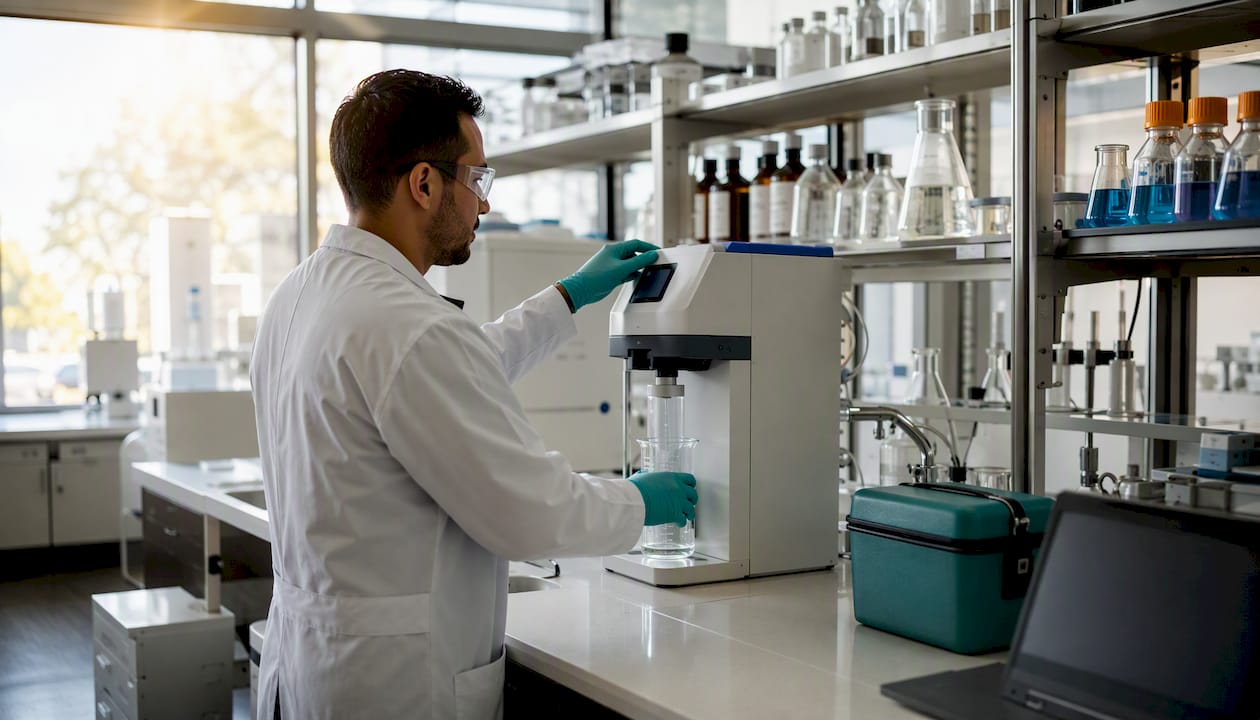
The HLP-series water purification systems deliver Type 1 and Type 2 ultrapure water for LC-MS mobile phase preparation, TOC analysis, and ICP-MS sample dilution. Water quality directly affects baseline noise and detection limits, so pairing a water system with a gas generator under a single service contract simplifies both procurement and preventive maintenance scheduling.
NXT Power conditioning and UPS
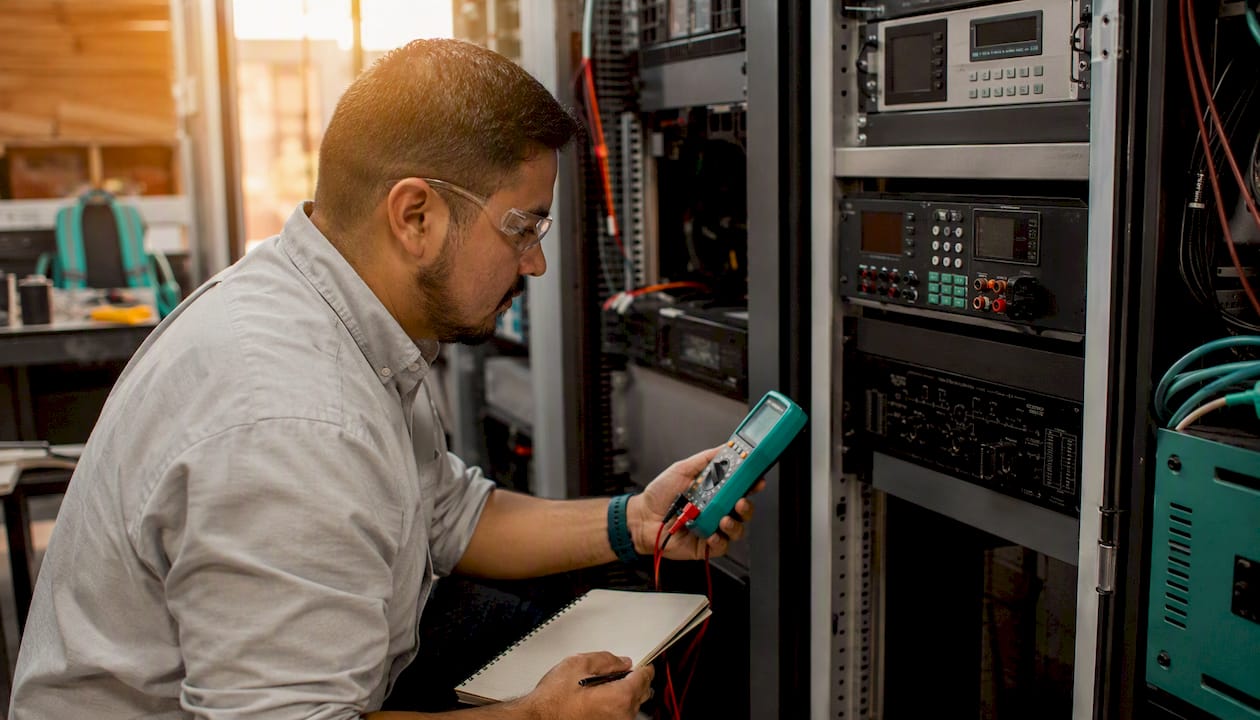
NXT Power solutions protect analytical instruments from voltage transients, sags, and harmonic distortion that can corrupt detector signals and shorten electronics life. This is instrument-level power protection, not facility-wide power engineering. A mass spectrometer’s detector board is far more sensitive to a microsecond voltage spike than a standard office computer, and NXT Power conditioning is sized and specified with that sensitivity in mind.
Pro Tip: Bundle your gas generator and NXT Power conditioning under a single SLI maintenance contract. Coordinating preventive maintenance visits for both systems in one annual window reduces lab downtime and simplifies your service documentation.
Does SLI’s equipment match your instruments and purity requirements?
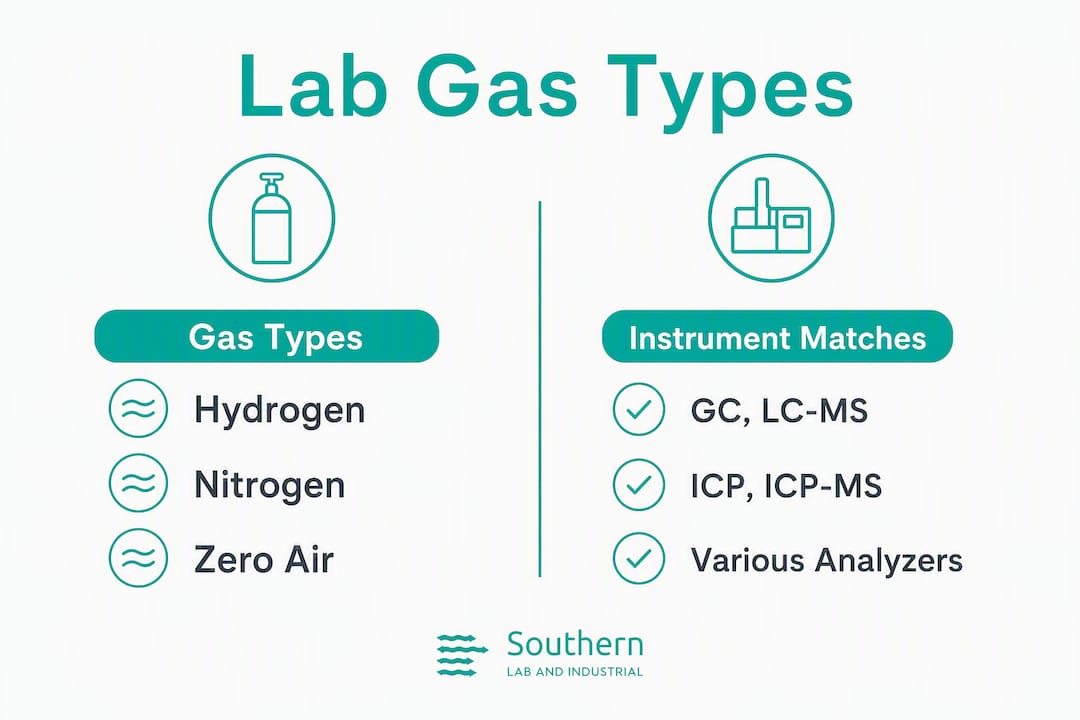
Matching gas purity and continuous flow to instrument demand is the decisive factor for analytical performance. On-site PEM and PSA systems are sized around both peak and steady-state instrument demand, so the sizing conversation starts with your instrument list, not a catalog page.
| Gas type | Typical purity range | Common instrument matches | Sizing considerations |
|---|---|---|---|
| Hydrogen (PEM) | 99.999% | GC (carrier/FID fuel), GC-MS | Flow per detector; multi-instrument headers require higher capacity |
| Nitrogen (PSA) | — | LC-MS, ICP-MS, FTIR, evaporators | Simultaneous peak demand across all connected instruments |
| Zero air | — | FID reference, TOC combustion | Detector sensitivity floor sets the purity spec |
For ICP and ICP-MS workflows, nitrogen purity at the collision/reaction cell inlet is particularly critical. A PSA system delivering 99.999% N2 at the generator outlet can still underperform if the distribution line introduces contamination, which is why SLI’s site surveys include point-of-use sampling.
Scalability is straightforward with PSA nitrogen: additional instruments can be added to an existing header up to the generator’s rated output. Hydrogen PEM systems are modular in some configurations, allowing a second generator to be added in parallel for redundancy or capacity expansion. Common installation constraints include adequate ventilation for hydrogen (per NFPA 2 requirements), compressed-air supply quality for PSA systems, and floor space for gas cabinets.
Pro Tip: Before accepting any gas generator installation, verify purity at the point of use with a calibrated trace-level analyzer, not just at the generator outlet. Document the result in your acceptance test report alongside steady-state flow under cyclic instrument load.
How to buy from SLI: the procurement process from inquiry to installation
The procurement path is straightforward, but lead times vary based on system complexity and site conditions.
- Initial inquiry: Contact SLI by phone or via the website with your instrument list, required gas types, and approximate flow/purity targets.
- Site assessment: An SLI field engineer visits your facility to confirm utility availability (compressed air, deionized water feed, ventilation), measure footprint constraints, and identify any permitting requirements for hydrogen.
- Proposal and sizing: SLI delivers a written proposal with system model, capacity, installation scope, and service contract options.
- Purchase order and lead time: Standard PSA nitrogen systems typically ship faster than custom hydrogen skid configurations. Integration complexity factors that extend timelines include custom skid fabrication, gas cabinet or ventilation upgrades, compressed-air conditioning, and local permitting for hydrogen equipment.
- Installation and start-up: SLI’s field team handles mechanical and utility connections, system commissioning, and operator training.
- Acceptance testing: Point-of-use purity verification, flow confirmation under instrument load, and alarm/response documentation are completed before handover.
For capital justification, SLI publishes a dedicated gas generator ROI guide for research institutions that walks through total cost of ownership versus cylinder supply, payback period calculations, and the hidden costs of cylinder logistics and downtime.
What does post-sale support from SLI look like?
SLI’s service model is built around keeping instruments running, not just responding when they stop. The service and support program covers LNI Swissgas, Nel Hydrogen, and NXT Power equipment under a unified maintenance framework.
- Preventive maintenance plans: Scheduled visits covering filter replacement, membrane inspection, desiccant checks, and system calibration verification.
- Parts availability: OEM parts sourced directly through LNI Swissgas, Nel Hydrogen, and NXT Power, reducing lead time on critical components.
- Response tiers: Service contract levels vary by response time commitment; options range from next-business-day to priority same-day response for critical lab operations.
- Troubleshooting resources: SLI maintains online error code and fault resolution guidance so operators can diagnose common faults before calling for a service visit.
- Handover documentation: At installation completion, SLI provides system manuals, acceptance test records, alarm response procedures, and a maintenance schedule.
Scheduling a maintenance visit is handled directly through SLI’s Houston-based support team. For labs running 24/7 operations, coordinating preventive maintenance during planned instrument downtime windows avoids unplanned interruptions.
Why SLI’s OEM partnerships matter for procurement
SLI’s three core OEM partners each bring distinct technical credibility to the product lineup.
- LNI Swissgas: — Swiss-engineered hydrogen and nitrogen generators with a long track record in analytical laboratory applications. LNI’s PEM and PSA platforms are designed for the purity and flow stability that GC and LC-MS workflows demand.
- Nel Hydrogen: — A globally recognized electrolyzer manufacturer with industrial-scale hydrogen production capability. For industrial hydrogen buyers on the Gulf Coast, Nel’s systems address higher-volume production requirements beyond typical lab-scale demand.
- NXT Power: — Instrument-focused power conditioning and UPS designed specifically for the sensitivity of analytical electronics, not general commercial power protection.
For labs where quality management systems reference ISO 17025:2017 or similar standards, OEM-backed equipment with documented calibration and traceable parts provenance simplifies audit preparation. Warranty claims and spare-parts provisioning flow through SLI as the authorized regional distributor, which means one point of contact rather than separate manufacturer relationships.
SLI resources and application examples
SLI publishes several resources that support the purchase and operational phases:
- Lab solutions and application pages map specific gas types and flow configurations to instrument families including GC, GC-MS, LC-MS, ICP-MS, FTIR, and TOC.
- The gas generator ROI guide provides a structured framework for comparing cylinder supply costs against on-site generation over a multi-year horizon.
- Troubleshooting and error code documentation helps operators resolve common faults without waiting for a service call.
- The gas generation scalability explainer addresses how to plan for instrument fleet growth without over-specifying at initial purchase.
Lab managers who want to review a specific application outcome or reference a comparable installation can request that information directly from SLI’s technical team during the site assessment phase.
How to contact SLI and what to prepare for a site survey
Corporate address: 2600 S Shore Blvd, League City, TX (per Procore network listing)
Phone: +1 (713) 653-3424
Website: getsli.com
Service area: Gulf Coast, Houston metro, and surrounding industrial corridor
Before your site assessment, have the following ready:
- Complete instrument list with gas type, required purity, and flow rate per instrument
- Current gas supply method (cylinder size, vendor, monthly volume)
- Utility details: compressed-air pressure and quality, deionized water availability, available floor space and ventilation
- Any site-specific permitting or safety requirements (particularly for hydrogen)
- Preferred service contract level and maintenance response expectations
Key Takeaways
SLI is the Gulf Coast’s turnkey source for on-site lab gas generation, water purification, and NXT Power instrument conditioning, backed by LNI Swissgas, Nel Hydrogen, and NXT Power OEM partnerships.
| Point | Details |
|---|---|
| Core product families | SLI sells and supports H2 (PEM), N2 (PSA), zero-air generators, HLP-series water purification, and NXT Power conditioning. |
| Instrument compatibility | Systems are sized for GC, GC-MS, LC-MS, ICP-MS, FTIR, and TOC instruments based on purity and peak flow demand. |
| Turnkey service model | Every sale includes site assessment, installation, operator training, and maintenance contract options. |
| ROI justification | SLI’s gas generator ROI guide supports capital purchase justification for research institutions and industrial buyers. |
| Contact SLI | Reach SLI at +1 (713) 653-3424 or getsli.com to request a site assessment and custom sizing proposal. |
The case for local, turnkey support in Gulf Coast lab operations
The Gulf Coast’s combination of petrochemical industry density, research university infrastructure, and year-round operational intensity creates a specific set of demands that generic national distributors rarely address well. Labs here run instruments continuously, often in facilities where cylinder logistics are genuinely difficult, and where a gas supply interruption does not just delay an experiment — it stops production or invalidates a regulatory submission.
What SLI gets right is the local field presence. Having Houston-based technicians who can respond to an installation issue or a service call without a multi-day logistics delay changes the risk calculus for a lab manager deciding between on-site generation and cylinder supply. The ROI math on cylinder replacement is well-documented, but the less-discussed factor is the operational confidence that comes from knowing your service provider is 30 minutes away, not 300.
The OEM partnership model also matters more than it might appear in a spec sheet comparison. When a PEM membrane needs replacement or a PSA desiccant bed reaches end of life, parts sourced through an authorized distributor arrive with traceability documentation that matters for ISO 17025 audits and internal quality records. That is a detail that surfaces only after installation, but it is the kind of detail that determines whether a vendor relationship lasts two years or twenty.
Ready to replace cylinder supply with on-site gas generation?
Labs running GC, LC-MS, ICP-MS, or FTIR instruments on cylinder gas are paying for logistics, handling, and downtime risk that on-site generation eliminates. SLI delivers a complete solution: certified equipment from LNI Swissgas, Nel Hydrogen, and NXT Power, installed and commissioned by Houston-based field engineers, with maintenance contracts that keep instruments running.
The starting point is a site assessment. SLI’s field team will review your instrument list, confirm purity and flow requirements, and deliver a proposal with system sizing, installation scope, and total cost of ownership. Review the lab gas generator product line or call +1 (713) 653-3424 to schedule your assessment today.
Useful sources and manufacturer resources
- SLI primary landing page — company overview, contact information, and service area
- Lab solutions and gas generator product pages — HG, NG, and ZA series specs and instrument matches
- Applications guide — gas type and flow mapping for GC, LC-MS, ICP-MS, FTIR, and TOC
- Gas generator ROI guide for research institutions — total cost of ownership and payback period framework
- Error codes and troubleshooting — operator-level fault resolution reference
- Service and support page — maintenance contract options and OEM parts support
- NXT Power critical power page — instrument-level power conditioning and UPS specifications
- HLP-series water purification — ultrapure water system specs and instrument compatibility
- Gas generator integration challenges — real-world installation examples and site constraint guidance
Contact SLI directly for OEM-verified spec sheets, site-specific sizing calculations, and current lead time estimates.
Recommended
- Top 6 Sglab.com Alternatives Providers 2026 – getsli.com
- On-Site Lab Gas Generators & Power Protection | SLI Houston
- Gas Generation Scalability Explained for Lab Managers – getsli.com
- Gas Generation System Troubleshooting Steps for Labs – getsli.com