Baseline drift and ghost peaks
Trace hydrocarbons and moisture raise the baseline and put peaks where no analyte exists. It is the hardest noise to chase, because it is not in your sample.
An FID counts the carbon it sees. Trace hydrocarbons in your air supply become baseline drift, ghost peaks and false positives, none of it from your sample.
ILLUSTRATIVE. SHOWS THE EFFECT OF AIR-SUPPLY HYDROCARBONS ON AN FID BASELINE, NOT DATA FROM A SPECIFIC INSTRUMENT.
An FID burns hydrogen in air and counts the carbon it sees, so any carbon in the air gets counted too: trace hydrocarbons, methane, moisture. Cylinder air varies bottle to bottle, house compressors pull in whatever the building breathes, and ambient hydrocarbons run highest in late summer. The result shows up at your detector, not on the gas invoice.
Trace hydrocarbons and moisture raise the baseline and put peaks where no analyte exists. It is the hardest noise to chase, because it is not in your sample.
A new bottle or a humid afternoon changes what reaches the flame. Re-equilibrating after every swap is time your analysts should not have to spend.
House compressors pull in whatever the building breathes, and ambient hydrocarbons run highest through late summer.
Identical analytes, identical column, identical operator. The only thing that changes is what feeds the flame.
Hydrogen fuels the flame. Zero air feeds the oxidant. They cannot come from one unit, so SLI specs both and sizes them together for your bench. Every model below is stocked and supported from League City.
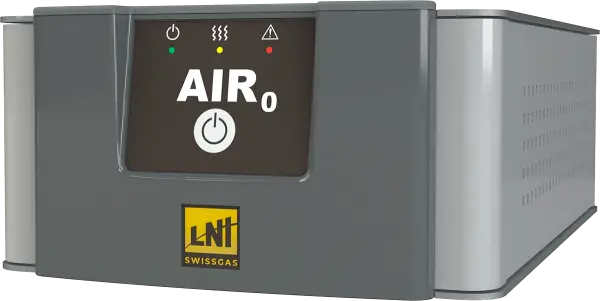
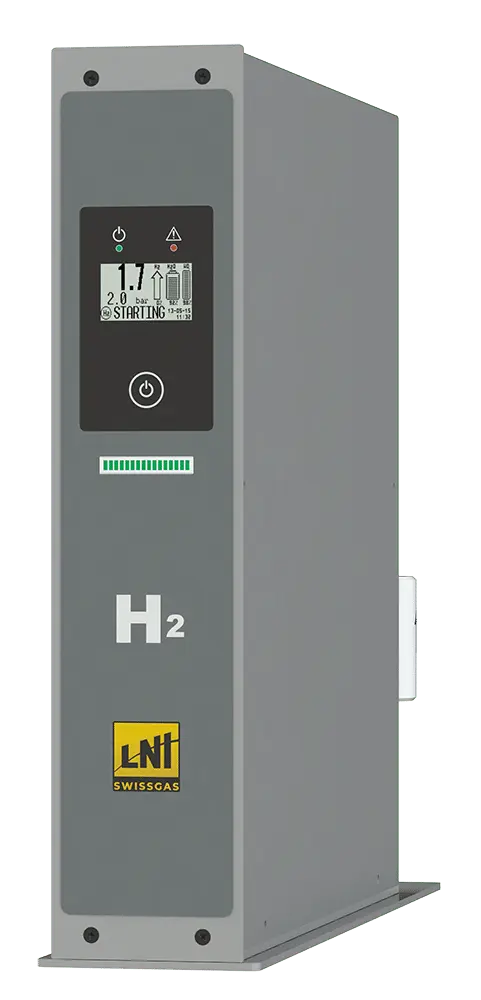
Single GC-FID instrument supply. Ultra-thin 14 cm profile, slots into any bench. Palladium catalyst oven purification.
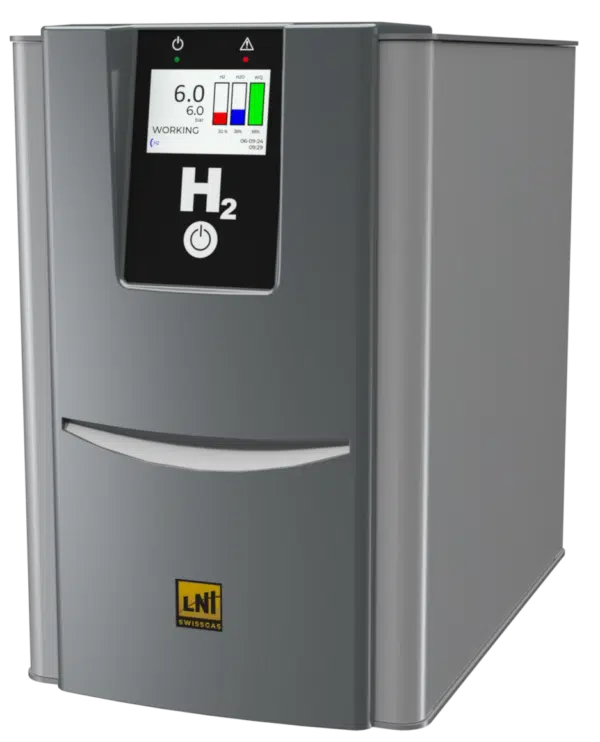
Covers a single high-flow GC-FID or two standard detectors. Benchtop footprint, external air supply.
Mid-range flow for multiple GC-FID instruments or high-flow detectors. Larger catalyst bed for sustained high output.
Highest flow benchtop FID Air model. Ideal for multi-instrument labs or high-demand fuel-air supply applications.
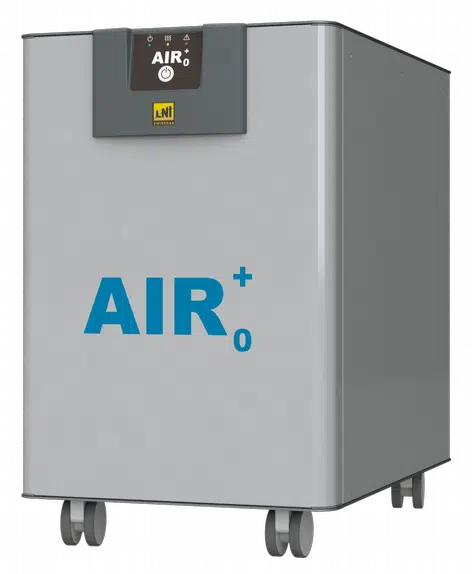
Truly standalone, plug into wall power and start producing zero air. Built-in oil-free piston compressor. For single GC-FID without compressed air infrastructure.
Mid-flow C model with built-in oil-free compressor. Three independent flow configurations from the same chassis. RS-232 for service, RS-485 for lab automation.
Highest flow C model. Three independent flow configurations from the same chassis. RS-232 for service, RS-485 for lab automation.
High-flow C PLUS model, 15 L/min for multi-instrument FID labs. Internal 10 L + 5 L tanks buffer peak demand.
Highest-flow C PLUS model, 30 L/min for multi-instrument FID labs or continuous high-demand supply. Internal 10 L + 5 L tanks buffer peak demand.
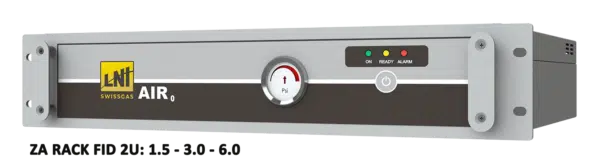
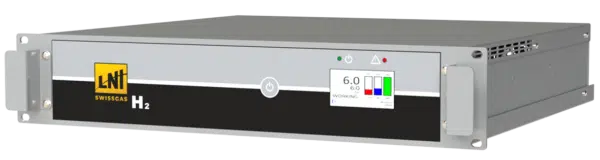
Compact 2-unit rack profile for small-flow FID applications. Three flow configurations: 1.5, 3.0, or 6.0 L/min. Fits any 19" instrument cabinet.
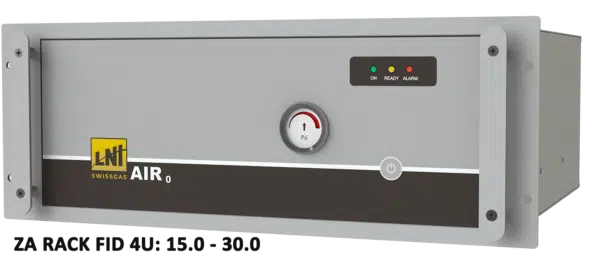
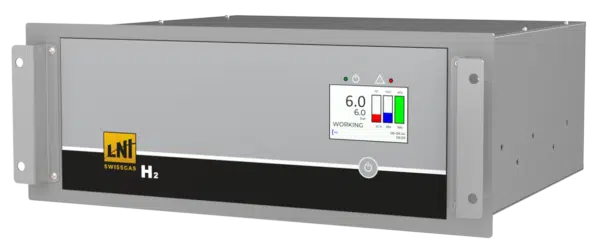
High-flow 4U rack model. 50 L/min variant uses 65 cm deep chassis. For multi-instrument labs with multiple GC-FID detectors or high-demand applications.
Two independently regulated zero air outlets. RS-485 and RS-232. Palladium catalyst. Oil-free compressor. For dual GC-FID setups from a single generator.
Higher flow dual-channel variant. Two 3 L/min outputs independently regulated. Compact same footprint as FID Air C series.
Hydrogen only, static dryer, stackable ST chassis. Pair with a ZA zero air unit for a complete GC-FID gas supply.
Integrated Zero Air for FID applications. Complete gas solution in single stackable unit.
Affordable dual-gas solution with integrated hydrocarbon scrubber.
Premium model with PSA drying for ultra-high purity. Ideal for GC-FID, GC-MS carrier gas, and ICP-MS applications.
Cost-effective solution with static dryer and smart humidity safeguard. Perfect for GC-FID/NPD/FPD detectors.
High-flow rack solution for multiple instruments. PSA drying ensures 99.99999% purity.
That is what the assessment is for. A Sales Engineer maps your combined FID air and hydrogen demand, then specs the units that cover it with headroom. Full specifications for every model live on the ZA Series zero air generators and HG Series hydrogen generators pages, including the AG OFCAS compressors that feed the external-air models.
The purchase price is the visible number. These are the ones that show up in your week.
| Cylinders / house air | On-site generation | |
|---|---|---|
| Air purity | Varies by bottle, building and season | <0.05 ppm THC constant |
| Supply | Deliveries, rental, demurrage, changeovers | A power line, plus DI water for hydrogen |
| After a swap | Re-equilibrate, re-check, sometimes rerun | Nothing to swap |
| Floor and safety | High-pressure bank, storage, handling | Small low-pressure volume, made on demand |
| Cost shape | Recurring and inflating | Capital once, then a fixed utility cost |
| Who supports it | A delivery driver and a phone queue | An SLI Sales Engineer, on site |
On-site zero air and hydrogen commonly pay for themselves within a couple of years for labs with steady consumption, after which gas becomes a fixed utility cost instead of a recurring, inflating bill. We build your ROI from your actual gas usage, not industry averages.
National suppliers drop a generator at your dock and leave the rest to you. Here is what working with SLI actually looks like.
A Sales Engineer reviews your detectors, current air source and flow needs.
We size the right ZA and HG pair for your combined bench, with headroom.
We commission the units on site and bring them up to spec with you.
Your team is trained on the system before we leave the building.
Ongoing preventive maintenance, calibration and parts across 20 states.
SLI provides consulting, commissioning, training and preventive maintenance. Physical placement and plumbing stay with your facility, and your lab re-establishes its own methods. We share the best practices that make that easier.
Your FID already burns hydrogen. The only question is whether it comes from a cylinder or a generator. A generator makes gas as your FIDs draw it, holding a small, low-pressure volume rather than the large, high-pressure inventory a cylinder bank represents.
The generator produces gas only as your instruments draw it. There is no large standing inventory to manage.
Only a small quantity is held on site at any moment, inherently safer than a bank of high-pressure cylinders.
Integrated leak detection and automatic shut-off are designed into the unit, not bolted on afterward.
Modern GCs are hydrogen-ready, and SLI shares the best practices that make the switch easier.
Until the day it is not. House and cylinder air drift with the building, the season and the bottle. A catalytic zero-air generator holds under 0.05 ppm THC continuously, so the variable simply leaves your method. We keep safety claims measured: your SLI engineer reviews your specific lab and methods before any spec.
A Sales Engineer reviews your GC-FID instruments and gas setup, then writes you a specification for your bench. Not a brochure and not a sales call: a document you can budget from, compare suppliers against, and keep, whether or not you buy from us.
The real SLI Excel worksheet to map each instrument's gas needs, emailed the moment you submit. About five minutes to fill in.
Tell us what is on your bench and a Sales Engineer will write you a specification for it, with an itemized quote alongside, within one business day.