When you’re responsible for keeping critical operations running along the Gulf Coast, a generator failure isn’t an inconvenience — it’s a crisis. Yet many facility managers and procurement officers sign off on major generator purchases without fully grasping what their warranty actually covers, when it starts, or what conditions can quietly void it. Industrial generator warranty explained in simple terms should be straightforward, but manufacturer documents are rarely written with your operational reality in mind. This guide cuts through the fine print to give you a clear, working understanding of every term that matters before a failure puts it to the test.
Table of Contents
- Understanding standard industrial generator warranty coverage
- Warranty start dates and how they affect coverage periods
- Common warranty exclusions and conditions that void coverage
- Manufacturer warranty structure complexities and coverage gaps
- How to preserve your warranty: maintenance, registration, and claims best practices
- The critical truth about industrial generator warranties most facility managers overlook
- Ensure your industrial power reliability with SLI’s tailored generator solutions and support
- Frequently asked questions
Key Takeaways
| Point | Details |
|---|---|
| Warranty basics | Most industrial generator warranties cover 24 months or 2,000 hours, protecting against manufacturer defects in core components. |
| Start date importance | Choosing the commissioning date as your warranty start maximizes coverage and reduces risk of time lost during shipping or storage. |
| Maintenance adherence | Strictly following maintenance schedules and using authorized parts is essential to keep warranty valid and avoid claim denials. |
| Warranty fragmentation | Warranties from generator assembler, engine, and alternator manufacturers must align to avoid coverage gaps during failures. |
| Proactive claim management | Maintain detailed logs and report failures promptly to preserve warranty validity and leverage goodwill policies when needed. |
Understanding standard industrial generator warranty coverage
Most facility managers assume their generator warranty is a straightforward promise: if something breaks, the manufacturer fixes it. The reality is considerably more conditional. A standard commercial diesel generator warranty typically covers 24 months or 2,000 operating hours, whichever comes first, and applies only to defects in materials and workmanship. That distinction matters. Wear and tear, environmental damage, and operator error fall outside its scope from day one.
Understanding generator warranties also requires knowing what components are actually included. Most manufacturer warranties cover three primary systems:
- Engine assembly: The core power unit, including the block, crankshaft, pistons, and fuel injection system
- Alternator: The component that converts mechanical energy to electrical output, often covered under a separate alternator OEM warranty
- Control system: The automated monitoring and switching panel, sometimes subject to its own electronic component warranty
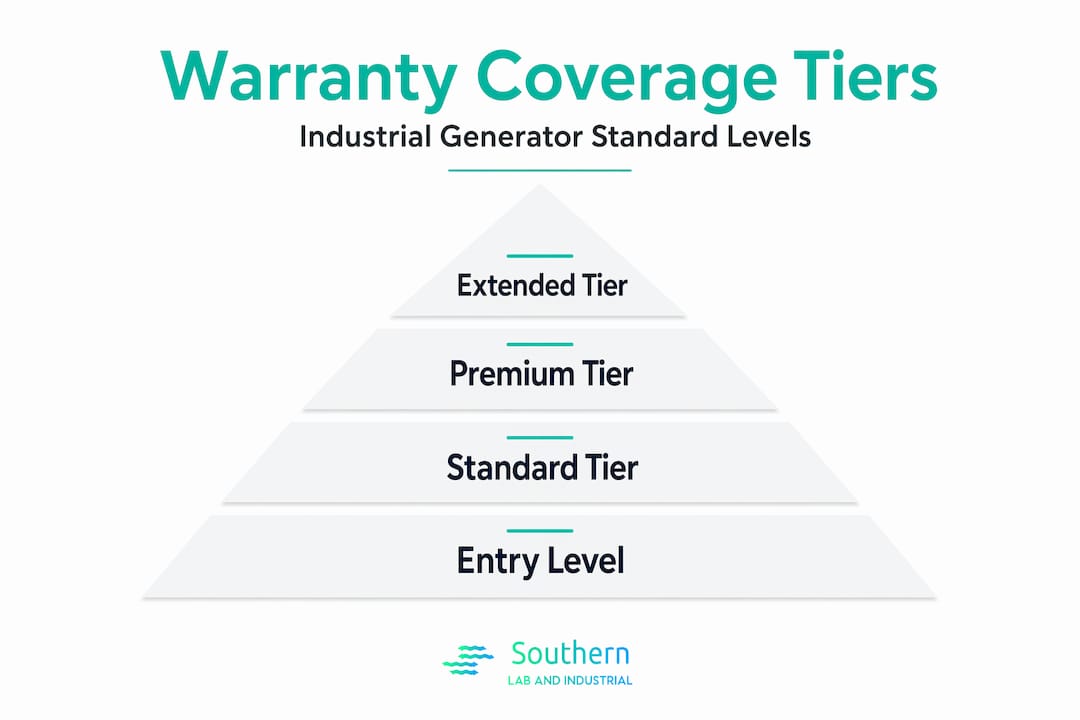
Beyond the base coverage, generator warranty options typically fall into four tiers:
| Warranty tier | Typical duration | Key coverage features |
|---|---|---|
| Entry level | 12 months / 1,000 hours | Engine and alternator defects only |
| Standard | 24 months / 2,000 hours | Engine, alternator, control panel |
| Premium | 36 months / 3,000 hours | All components plus labor |
| Extended | Up to 60 months | Full coverage with scheduled maintenance included |
The “whichever comes first” clause is where many Gulf Coast facilities get caught. A generator running in continuous standby for emergency backup accumulates hours slowly, so a time limit usually expires first. A generator powering a primary industrial process runs hours quickly, often burning through the hour limit in under a year. Know your typical operating profile before you assume 24 months of protection actually means 24 months of protection.
Major brands do vary in their generator warranty details. Cummins, for example, structures its warranty around engine model lines and application class. Caterpillar ties coverage to dealer network certification. Perkins offers region-specific terms through authorized distributors. These variations make it critical to read the actual warranty document, not just the sales summary.
Pro Tip: Ask your vendor to provide warranty coverage in writing that specifies both the time limit and the hour limit before you finalize your purchase order. For industrial generators coverage, confirming these two numbers upfront can prevent costly disputes later.
Warranty start dates and how they affect coverage periods
With the coverage terms clear, understanding when that coverage officially begins is critical to protect your investment.
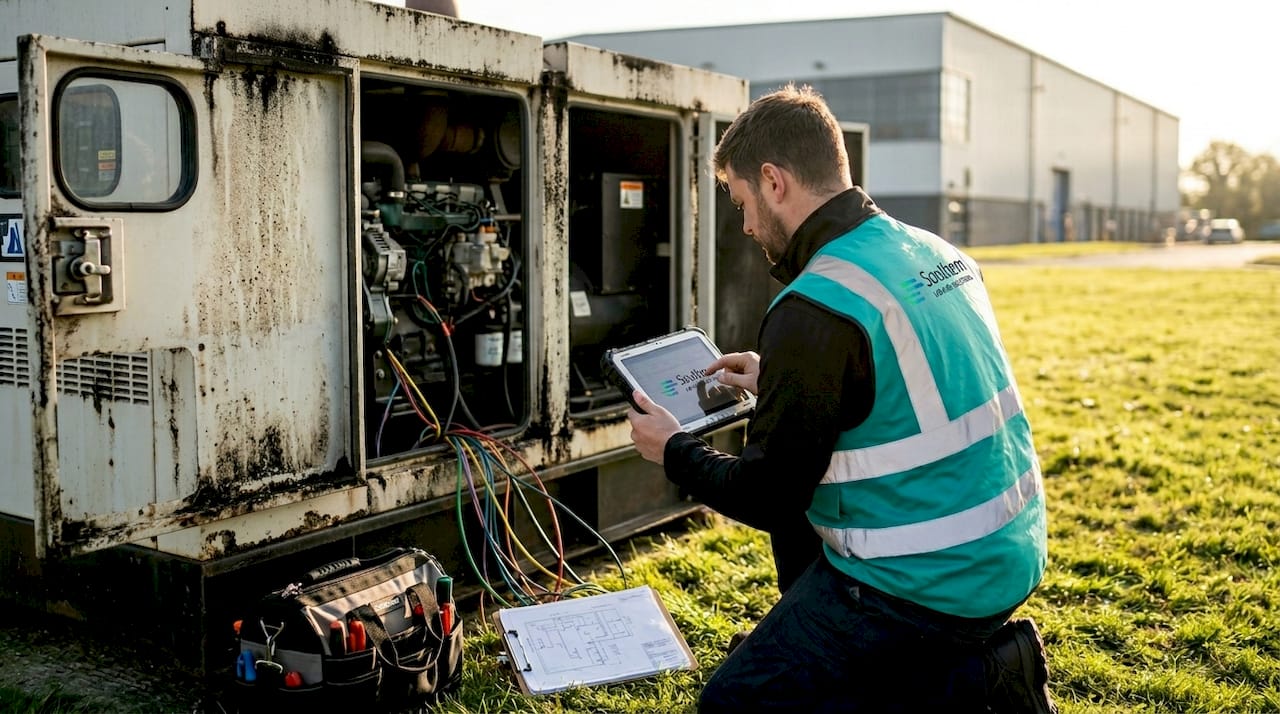
The warranty start date is typically defined by one of three milestones: factory commissioning date, delivery date to the buyer’s warehouse, or on-site installation and commissioning. Each option creates a different risk profile for your facility.
Here is how each start date plays out in practice:
- Factory commissioning date: The warranty clock starts when the unit is tested and signed off at the manufacturer’s facility. If your generator sits in a warehouse for four months before installation, you have already lost four months of coverage before your first load test.
- Delivery date: Coverage begins when the unit arrives on your property. Storage delays still count against your warranty period, though you have more control than with the factory date.
- On-site installation and commissioning: The most favorable option for end-users. Your warranty begins when the unit is actually running and serving your facility, which means zero coverage is wasted on transit or storage time.
For Gulf Coast facilities that routinely deal with project delays, permitting timelines, or staged construction schedules, the difference between a factory commissioning date and an on-site commissioning date can represent months of lost warranty coverage on a six-figure asset.
Pro Tip: During contract negotiation, push specifically for an on-site commissioning start date. Most professional manufacturers will accommodate this for direct buyers. Document the agreed start date in your purchase contract and confirm it appears in the warranty registration paperwork. You can review warranty start date options and related commissioning considerations for industrial power systems before your next procurement cycle.
Common warranty exclusions and conditions that void coverage
Next, let’s focus on the fine print that can make or break your warranty claims, helping you avoid common traps.
Over 70% of warranty claims are denied due to missed maintenance, using non-genuine parts, or failure to register within required timelines. That statistic should be alarming for any facility manager who treats warranty as a passive safety net.
The most common exclusions and voiding conditions include:
- Missed scheduled maintenance: Manufacturers specify service intervals in hours and months. Missing even one oil change or filter replacement can give the manufacturer grounds to deny a future claim on any related component.
- Non-approved replacement parts: Using a third-party filter, belt, or fuel injector instead of the manufacturer-specified part is one of the fastest ways to void coverage, even if the aftermarket part appears identical.
- Overloading the generator: Running a unit beyond its rated kilowatt capacity causes accelerated wear that falls entirely outside warranty coverage.
- Unauthorized repairs: Any repair performed by a technician not certified by the manufacturer can void the warranty on every component they touched, and sometimes the whole unit.
- Failure to register: Most manufacturers require product registration within 30 to 90 days of installation. Missing this window can invalidate the entire warranty before you have filed a single claim.
- Improper fuel use: Running a diesel generator on off-spec fuel or blended fuels outside the manufacturer’s approved range is a common exclusion trigger in coastal industrial environments.
What does generator warranty cover? Only failures caused by manufacturing defects, under normal operating conditions, with documented maintenance, using approved parts and certified technicians. Everything else is your responsibility.
Labor costs are another frequent point of confusion. Many standard warranties cover parts only. The cost to diagnose the failure, remove the defective component, and reinstall a replacement often falls entirely on you unless your warranty explicitly states otherwise. Premium and extended tiers typically include labor; entry and standard tiers typically do not.
Pro Tip: Keep a timestamped maintenance log in a format that can be produced quickly during a warranty claim. A digital record tied to your CMMS (computerized maintenance management system) is ideal. Work with authorized service and parts providers to ensure every maintenance event is documented in a format the manufacturer accepts.
Manufacturer warranty structure complexities and coverage gaps
Beyond exclusions, it’s crucial to understand how different manufacturers’ warranties interact to ensure seamless coverage.
Industrial generator warranty terms frequently involve more than one party. A generator set is typically assembled from components made by separate manufacturers, and each brings its own warranty. The warranty structure is often fragmented across the genset assembler, engine OEM, and alternator OEM, which creates the risk of roving coverage gaps when terms do not align.
Here is how responsibilities typically break down:
| Warranty party | Components covered | Typical duration |
|---|---|---|
| Genset assembler | Frame, wiring, control panel, fuel system | 12 to 24 months |
| Engine OEM (e.g., Cummins, Perkins) | Engine block, pistons, fuel injection | 24 to 36 months |
| Alternator OEM | Windings, rotor, stator, bearings | 12 to 24 months |
The risk scenario that causes the most damage: your engine develops a fault at month 20. The genset assembler’s warranty expired at 12 months. The engine OEM covers the engine block, but the failure originated in a fuel system component that the assembler claims is outside their scope. Meanwhile, the alternator OEM has no involvement. You’re left arguing between parties while your facility is down.
To manage this risk, follow these steps at the time of purchase:
- Request a single consolidated warranty document from the genset supplier that references all OEM warranties and clarifies who handles claims for each component.
- Confirm that warranty start dates across all three parties are aligned. Misaligned start dates are the most common source of coverage gaps.
- Identify the designated single point of contact for warranty claims so you are not redirected between manufacturers during a failure.
- Document in writing which party covers the control system, fuel system, and cooling system, since these components are frequently disputed.
- Review warranty coverage tiers for your specific equipment class to understand how extended coverage may bridge assembler and OEM warranty gaps.
How to preserve your warranty: maintenance, registration, and claims best practices
Finally, let’s translate your warranty knowledge into practical ongoing actions to protect and maximize your warranty benefits.
Maintaining a meticulous service log and using authorized technicians is essential to keep a warranty valid. Late reporting is also critical: most manufacturers require failure notification within 30 days of detection to consider a claim eligible.
Here are the core practices that protect your coverage from day one through expiration:
- Register the warranty immediately. Do not wait until a failure prompts you to dig up the paperwork. Register within the first two weeks of commissioning and save the confirmation.
- Schedule and document every maintenance event. Record the date, technician name, parts used (with part numbers), hours on the generator, and any findings. This is your primary evidence during a claim review.
- Use only authorized parts and certified technicians. Maintain a list of your manufacturer’s approved service providers for Gulf Coast facilities and vet any new contractors before authorizing repairs.
- Report failures within the required window. Notify the manufacturer in writing within 30 days of detecting a fault. Late reporting is one of the most avoidable reasons claims are denied.
- Build a claims file proactively. Include photos of the failure, service records, communication with the manufacturer, and any test reports. A well-organized claims file reduces resolution time significantly.
- Explore goodwill adjustments after expiration. Goodwill adjustments may cover premature failures beyond the warranty period when documented properly and presented formally. These are discretionary, but manufacturers do grant them for loyal accounts with clean service histories.
Pro Tip: Pair your warranty management with a formal service agreement for generators. A documented service agreement with an authorized provider builds the service history that supports both in-warranty claims and goodwill requests after expiration. Review warranty preservation steps for power protection and generation systems before establishing your service calendar.
The critical truth about industrial generator warranties most facility managers overlook
Here is what fifteen years of working with industrial facilities along the Gulf Coast makes clear: most warranty disputes are not about defective equipment. They are about documentation failures, ignored start dates, and deferred maintenance that the manufacturer can point to as the cause of the failure.
A warranty is a conditional contract, not a blanket guarantee. The manufacturer’s obligation to you is explicitly tied to your obligations to them, and those obligations begin on day one, not on the day something breaks. Facility managers who treat warranty as passive protection almost always discover this the hard way.
The fragmented warranty structure across genset assemblers and OEMs is a genuine systemic problem, not a technicality. When a failure occurs at the boundary between two parties’ coverage, there is a real financial risk that neither steps forward without pressure. The facility managers who navigate this successfully are the ones who mapped out those boundaries in writing at the time of purchase, not the ones who assumed a single sales representative would sort it out later.
Extended warranties and service agreements for generators are valuable tools, but they do not compensate for poor maintenance records or missed registrations. They extend the period during which a manufacturer will honor a claim, but the same conditions that apply to the base warranty still apply to the extension.
Working with authorized generator service providers who understand manufacturer documentation requirements is one of the most practical steps you can take. It ensures that every maintenance event is recorded in the format manufacturers actually accept when reviewing claims, which is a detail that matters more than most procurement officers realize until they are in the middle of a denied claim.
The single most useful shift in thinking: treat your warranty as a living document that requires active management, not a certificate you file away and retrieve when things go wrong.
Ensure your industrial power reliability with SLI’s tailored generator solutions and support
Understanding your warranty terms is only part of protecting your facility’s power reliability. Applying that knowledge through the right service infrastructure is where uptime is actually won or lost.
SLI serves Gulf Coast industrial facilities and analytical laboratories with generator service and support that is built around manufacturer compliance from the first maintenance interval through extended coverage periods. Our technical team helps you navigate warranty registration, maintain the documentation that keeps claims viable, and identify service agreement structures that close the gaps between OEM warranties. Whether you operate industrial hydrogen generators or require comprehensive power protection for sensitive analytical instruments, SLI provides the local expertise and authorized service access that keeps your warranty intact and your operations running. Explore our laboratory gas generator solutions to see how we support the full lifecycle of industrial and laboratory power systems.
Frequently asked questions
What is the typical duration and coverage limit of a standard industrial generator warranty?
Most standard industrial generator warranties cover 24 months or 2,000 operating hours, whichever comes first, focusing on manufacturer defects in major components like the engine and alternator. The “whichever comes first” clause means high-utilization facilities often exhaust hour limits well before the time limit expires.
When does the warranty period usually begin for industrial generators?
The warranty period most commonly begins at on-site installation and commissioning, though manufacturers may use factory commissioning or delivery date instead. Negotiating for an on-site commissioning start date protects you from losing coverage during storage or project delays.
What common mistakes lead to denied warranty claims?
Over 70% of denials trace back to missed scheduled maintenance, use of non-genuine parts, failure to register within required timeframes, or unauthorized repairs. Documenting every service event with authorized technicians is the most direct way to keep claims viable.
Can warranty coverage overlap across different manufacturers for the generator set?
Yes, and the fragmented warranty structure across genset assembler, engine OEM, and alternator OEM can create gaps when terms are not aligned. Securing a written summary that maps each component to a specific warranty party at the time of purchase is the most effective way to manage this risk.
Is it possible to get repairs covered after the warranty expires?
Some manufacturers do offer goodwill adjustments for premature failures after the warranty period, particularly for accounts with clean, documented service histories. These are discretionary decisions by the manufacturer, not guaranteed entitlements, so maintaining thorough records throughout the warranty period maximizes your leverage.