Last updated August 19, 2026 · Reviewed by Kris Andaur, Founder & President, Southern Laboratory and Industrial
Not all electrolysis is created equal. Engineers and researchers who treat hydrogen production as a monolithic process often underestimate the fundamental differences between electrolyzer technologies, differences that determine efficiency, purity, and how well a system integrates with renewable power. Proton exchange membrane (PEM) electrolysis, the industry-standard term for what is commonly described as PEM electrolysis hydrogen production, stands apart because of its solid polymer electrolyte, compact architecture, and ability to respond dynamically to variable electrical loads. This guide breaks down the electrochemistry, the performance data, and the real-world deployment considerations that matter to engineers and researchers making technology decisions.
Table of Contents
- Key Takeaways
- What Is PEM electrolysis hydrogen and how it works
- Advantages and limitations compared to other electrolysis types
- Recent efficiency breakthroughs in PEM electrolyzer technology
- Practical applications of PEM electrolysis today
- Operational considerations and best practices
- My perspective on PEM electrolysis and what the field gets wrong
- Explore PEM hydrogen generation solutions with Getsli
- FAQ
Key Takeaways
| Point | Details |
|---|---|
| Solid membrane enables precision | PEM uses a polymer electrolyte membrane to conduct protons while electrically isolating the two electrode compartments. |
| Dynamic load response is a key advantage | PEM electrolyzers handle rapid power fluctuations from renewable sources better than alkaline systems. |
| Iridium cost limits scale-up | Catalyst scarcity and cost remain the primary barrier to widespread industrial PEM deployment. |
| Ultrapure water is non-negotiable | Deionized feedwater is mandatory to prevent catalyst poisoning and membrane degradation. |
| Market growth is accelerating | The global PEM electrolyzer market is projected to exceed USD 6 billion by 2034, driven by refining, ammonia, and transportation demand. |
What Is PEM electrolysis hydrogen and how it works
PEM electrolysis uses a solid polymer electrolyte membrane, most commonly Nafion, sandwiched between an anode and a cathode. When direct current is applied, water fed to the anode undergoes the Oxygen Evolution Reaction (OER): water molecules split into oxygen gas, protons, and electrons. The protons migrate through the membrane to the cathode, where the Hydrogen Evolution Reaction (HER) combines them with electrons from the external circuit to produce hydrogen gas.
The membrane serves two simultaneous functions. It conducts protons with high selectivity while acting as an electrical insulator, keeping the two electrode compartments separated and preventing gas crossover. This dual role is what gives PEM systems their characteristic high gas purity.
According to the U.S. Department of Energy, PEM electrolyzers typically operate between 70°C and 90°C with membrane thicknesses ranging from 100 to 200 μm and current densities of 1 to 3 A/cm². These operating parameters place PEM between the lower-temperature alkaline systems and the high-temperature solid oxide electrolyzers.
Key structural components of a PEM electrolyzer stack include:
- Polymer electrolyte membrane: Conducts protons, blocks electrons and gas crossover.
- Anode (oxygen side): Hosts the OER; typically coated with iridium oxide catalyst.
- Cathode (hydrogen side): Hosts the HER; typically uses platinum catalyst.
- Porous transport layers: Titanium-based sintered layers that distribute water and collect gas.
- Bipolar plates: Distribute current and manage thermal and fluid flow across the active cell area.
Pro Tip: When specifying a PEM stack for a new installation, confirm the membrane manufacturer’s stated equivalent weight, which directly affects proton conductivity and water uptake. Lower equivalent weight membranes conduct protons more efficiently but are more mechanically fragile under dynamic pressure cycling.
Advantages and limitations compared to other electrolysis types
PEM electrolysis does not win every comparison against alkaline or solid oxide electrolysis. The right technology depends on your application profile.
| Parameter | PEM Electrolysis | Alkaline Electrolysis | Solid Oxide Electrolysis |
|---|---|---|---|
| Operating temperature | 70°C to 90°C | 60°C to 80°C | 700°C to 900°C |
| Current density | 1 to 3 A/cm² | 0.2 to 0.4 A/cm² | 0.3 to 1 A/cm² |
| Load flexibility | Excellent | Poor to moderate | Poor |
| Gas purity | Very high | High | Very high |
| Catalyst materials | Iridium, platinum | Nickel | Nickel, ceramic |
| Capital cost | High | Lower | Very high |
| Maturity | Commercial | Very mature | Early commercial |
The most operationally significant advantage of PEM systems is their rapid load response (NREL, 2022), which makes them well-suited for coupling directly with solar and wind generation. Alkaline electrolyzers are better suited to continuous baseload operation; their performance degrades under frequent start-stop cycling and rapid power modulation. PEM systems handle exactly that without the same degradation penalty.
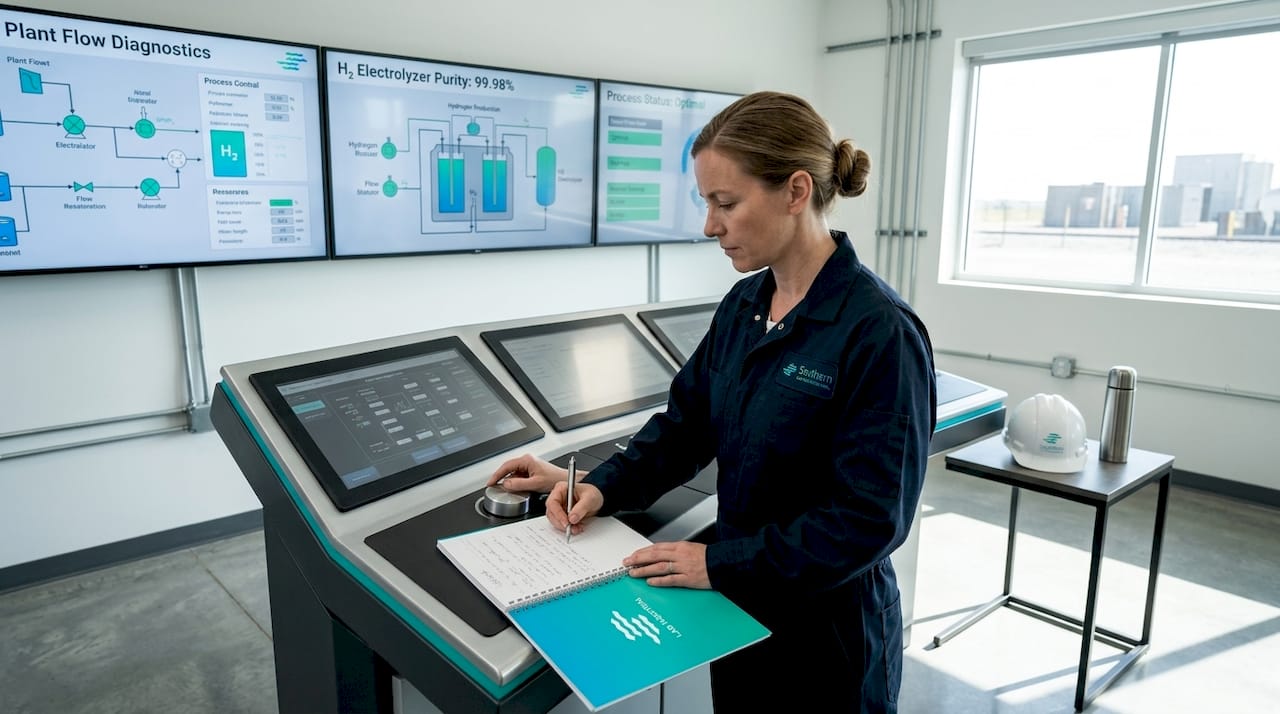
PEM also produces high-purity pressurized hydrogen as a direct output, which can reduce or eliminate downstream compression costs in many applications. Differential pressure designs can operate the hydrogen side at pressures exceeding 30 bar while maintaining the oxygen side near atmospheric pressure.
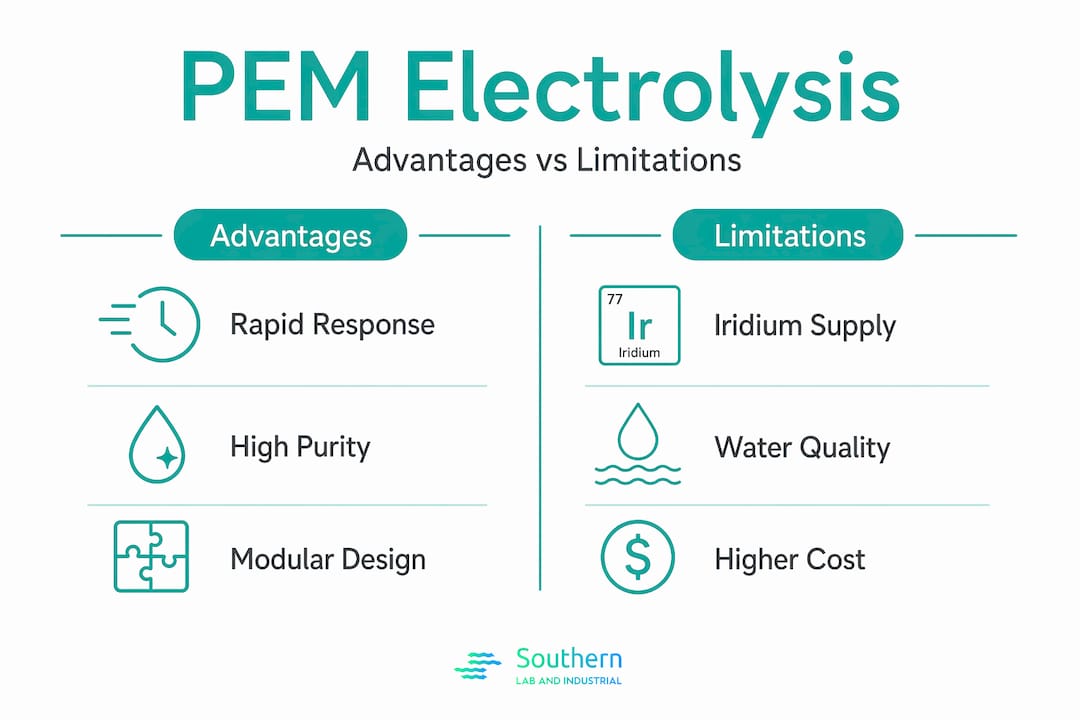
The limitations are real and worth stating plainly. Iridium, the primary anode catalyst, is among the rarest elements in the Earth’s crust. Catalyst scarcity and cost are the primary factors constraining PEM scale-up at the gigawatt level. Water purity requirements add operational overhead that alkaline systems do not demand to the same degree.
Pro Tip: If your facility already operates a high-purity deionized water system for analytical instruments, you likely have the infrastructure to feed a PEM electrolyzer without major additional capital investment. Run a water quality audit before assuming you need an entirely new purification skid.
Recent efficiency breakthroughs in PEM electrolyzer technology
The most striking recent development in PEM electrolysis came from Fraunhofer ISE, which achieved a record 31.3% solar-to-hydrogen efficiency (Fraunhofer ISE, May 2026) using micro-concentrator photovoltaic technology directly coupled with a PEM electrolyzer. The experimental configuration used a 1.13 cm² membrane area operating at 3.25 V and 368 mA/cm² current density, validated over 13 consecutive summer days. That result represents a substantial leap beyond previous benchmarks and demonstrates what integrated photovoltaic-PEM systems can achieve when component-level optimization is treated as a systems engineering problem rather than individual subcomponent improvements.
| Efficiency Metric | Benchmark Value | Source/Context |
|---|---|---|
| Solar-to-hydrogen (record) | 31.3% | Fraunhofer ISE, micro-concentrator PV + PEM, 2026 |
| Practical electrical efficiency | ~80% | Industry operational standard |
| Target electrical efficiency (2030) | 82 to 86% | Driven by membrane and catalyst advances |
| Operating current density | 368 mA/cm² | Fraunhofer ISE experimental cell |
“PEM electrolysis electrical efficiency is currently around 80% in practical applications, with research and development targets pointing toward 82 to 86% by 2030, driven by advances in membrane technology and catalyst optimization.” — Wikipedia: Proton exchange membrane electrolysis
On the catalyst side, the research direction is clear: reduce iridium loading while maintaining OER activity and durability (Thao et al., Small Science, 2024). Nanostructuring, alloying, and support material innovations are all active pathways. Some groups are evaluating iridium-free alternatives entirely, though none have yet matched iridium oxide’s combination of activity and stability under the aggressive oxidative conditions at the anode. The honest assessment is that iridium alternatives are promising on paper but have not yet demonstrated sufficient durability at industrially relevant current densities.
Practical applications of PEM electrolysis today
PEM electrolyzers are no longer solely a laboratory technology. Deployed capacity has grown substantially across several industrial sectors, and the global market is projected to exceed USD 6 billion by 2034 with a compound annual growth rate exceeding 30%.
Current deployment spans a broad range of applications:
- Refinery hydrogen supply: On-site PEM electrolyzers reduce dependence on steam methane reforming for hydrotreating and hydrocracking units.
- Ammonia and methanol production: Green hydrogen from PEM electrolysis feeds synthesis loops, decarbonizing commodity chemical manufacturing.
- Fuel cell testing and R&D: Laboratory and pilot-scale PEM systems provide precise, on-demand hydrogen supply for fuel cell development without cylinder logistics.
- Grid stabilization and power-to-gas: PEM electrolyzers absorb excess renewable generation and convert it to hydrogen for storage or injection into gas networks.
- Industrial gas supply: Facilities replacing high-pressure cylinder delivery with on-site PEM generation gain supply continuity and eliminate handling risk.
The load-following flexibility of PEM technology is particularly relevant in power-to-gas applications. A wind farm that generates peak power at night, when grid demand is low, can direct surplus electricity to a PEM electrolyzer rather than curtailing generation. The hydrogen produced can be stored in tanks, used as feedstock, or blended into natural gas pipelines. Alkaline systems cannot follow that operational profile without significant performance and degradation penalties. PEM’s flexibility with variable loads is not a marginal advantage; it is a structural one.
Operational considerations and best practices
Running a PEM electrolyzer reliably over its design lifetime requires disciplined water quality management and an understanding of common failure mechanisms.
Ultrapure deionized water is the non-negotiable feedstock requirement. Trace metal ions, even at the parts-per-billion level, accumulate in the membrane and catalyst layer through ion exchange, progressively poisoning the platinum and iridium catalysts and increasing internal resistance. Continuous online monitoring of feed water conductivity (targeting below 0.1 μS/cm) is standard practice in well-designed systems.
Key operational practices for PEM stack longevity include:
- Continuous water quality monitoring: Use inline conductivity sensors and ion exchange polishing to maintain feed water below specification limits.
- Controlled shutdown procedures: Avoid hard shutdowns under load; follow manufacturer-specified ramp-down protocols to prevent membrane dry-out or hydrogen crossover events.
- Gas crossover monitoring: Track hydrogen concentration in the oxygen stream as an early indicator of membrane pinhole formation.
- Thermal management: Maintain consistent operating temperature; thermal cycling accelerates membrane stress and catalyst layer delamination.
- Stack compression management: Monitor cell voltage distribution across individual cells to detect uneven compression or gasket degradation before a stack-level failure occurs.
Supply chain risk around iridium is an operational reality for procurement and maintenance planning. Systems deploying multiple stacks should work with suppliers to understand catalyst loading specifications and establish long-term supply agreements for membrane electrode assemblies.
Pro Tip: Schedule periodic electrochemical impedance spectroscopy (EIS) measurements on your stack. EIS provides a non-destructive snapshot of membrane resistance and catalyst layer degradation that correlates with remaining useful life, giving you data to plan maintenance before a performance cliff appears.
My perspective on PEM electrolysis and what the field gets wrong
I’ve worked alongside researchers and engineers specifying electrolyzer technology for everything from bench-scale R&D setups to multi-megawatt industrial projects. The most consistent mistake I see is treating PEM electrolysis as a straightforward drop-in improvement over alkaline systems without accounting for total cost of ownership over a ten-year horizon.
PEM wins on performance metrics in nearly every head-to-head comparison. The current density advantage is real, the gas purity is excellent, and the dynamic response capability is genuinely superior for renewable integration. But the iridium dependency is not a problem that better engineering alone will solve in the next few years. Any project planning today that assumes iridium costs will fall in line with optimistic research projections is taking on unpriced risk.
What I think the field undervalues is the operational discipline required to run a PEM stack at rated efficiency for its full design life. Water purity management, controlled shutdown protocols, and EIS-based condition monitoring are not optional refinements. They are the difference between a stack that delivers on its specification and one that degrades by 20% within three years.
The 31.3% solar-to-hydrogen result from Fraunhofer ISE is genuinely exciting, but integrated photovoltaic-PEM systems at that efficiency level are still experimental. Industrial adoption timelines for that architecture are measured in years, not months. My view is that the near-term opportunity is in better system integration and smarter operational practices for conventional PEM stacks, not waiting for the next materials breakthrough.
— Kris
Explore PEM hydrogen generation solutions with Getsli
If you are evaluating PEM electrolysis for your laboratory or industrial facility, Getsli offers a portfolio of hydrogen generation systems built on proven electrolyzer technology from Nel Hydrogen and LNI Swissgas. These are not off-the-shelf catalog products. Every system is selected, installed, and supported by a team with direct experience in Gulf Coast laboratory and industrial environments.

Whether you need a bench-scale unit for lab-scale hydrogen generation or a full industrial hydrogen supply system, Getsli provides turnkey installation, water purification integration, and ongoing technical support. The team also provides water purification systems through the HLP Series to meet the ultrapure feedwater requirements that PEM stacks demand. Contact Getsli to discuss your hydrogen production requirements and get a system specification matched to your actual operating conditions.
FAQ
What is a PEM electrolyzer?
A PEM electrolyzer is a device that splits water into hydrogen and oxygen using a solid polymer electrolyte membrane to conduct protons between the anode and cathode. It operates at temperatures between 70°C and 90°C with current densities of 1 to 3 A/cm².
How does PEM electrolysis differ from alkaline electrolysis?
PEM electrolysis uses a solid membrane electrolyte and operates at higher current densities with superior load flexibility, while alkaline electrolysis uses a liquid potassium hydroxide electrolyte and is better suited for continuous baseload operation.
What efficiency does PEM electrolysis achieve?
PEM electrolyzers currently achieve around 80% electrical efficiency in practical operation, with research targets aiming for 82 to 86% by 2030 through membrane and catalyst improvements.
Why does PEM electrolysis require ultrapure water?
Trace metal contaminants in feed water poison the iridium and platinum catalysts and increase membrane resistance, causing irreversible performance loss. Feed water conductivity must be maintained below 0.1 μS/cm.
What are the main applications of PEM electrolysis today?
PEM electrolyzers are deployed in refinery hydrogen supply, ammonia and methanol production, fuel cell testing, grid-scale power-to-gas storage, and on-site industrial gas generation, with market growth exceeding 30% CAGR through 2034.