Last updated August 19, 2026 · Reviewed by Kris Andaur, Founder & President, Southern Laboratory and Industrial
Installing a hydrogen generator is not a plug-and-play decision. Hydrogen generator installation requirements span multiple regulatory frameworks, from NFPA 2 and the International Fire Code to OSHA and IEC standards, and getting them wrong carries real consequences: permit rejections, failed inspections, and, at worst, safety incidents. Facility operators and engineers who approach this process without a structured checklist often discover gaps mid-project that delay commissioning by weeks. This article breaks down the ten most critical requirements you need to address before your system goes live.
Table of Contents
- Key takeaways
- 1. Understanding hydrogen generator installation requirements: compliance essentials
- 2. Ventilation design and mechanical system requirements
- 3. Hydrogen detection systems and sensor placement
- 4. Electrical classification and explosion-proof equipment
- 5. Water supply and quality requirements
- 6. Permitting, site preparation, and project timeline
- 7. Hydrogen piping and pressure system requirements
- 8. PEM vs. alkaline generator: installation impact comparison
- 9. Commissioning, testing, and documentation requirements
- 10. Ongoing maintenance and safety inspection schedule
- What I’ve learned from real hydrogen generator installations
- Hydrogen generator solutions built for compliance from day one
- FAQ
Key takeaways
| Point | Details |
|---|---|
| Regulatory compliance is non-negotiable | NFPA 2, IFC, and OSHA standards govern hydrogen generator installation and must be addressed before permitting. |
| Ventilation must be active, not passive | Automated ventilation controls that interlock with generator operation are required to maintain safe hydrogen concentrations. |
| Sensor placement determines early detection | Hydrogen sensors must be mounted at ceiling level near potential leak sources to trigger interlocks before concentrations reach dangerous thresholds. |
| Permitting takes longer than expected | Most commercial hydrogen generator projects require 8 to 16 weeks from permit application to commissioning approval. |
| Certification accelerates approvals | ANSI/CSA FC 1 and FC 6 certified equipment reduces regulatory barriers and speeds acceptance by authorities having jurisdiction. |
1. Understanding hydrogen generator installation requirements: compliance essentials
Before anything gets bolted to a concrete pad, you need to know which regulatory bodies have authority over your installation. The core standards are NFPA 2 (Hydrogen Technologies Code), NFPA 855, the International Fire Code (IFC), and OSHA 29 CFR 1910.119 for process safety. NFPA 2 addresses vessel design, pressure relief, venting, ignition source control, and electrical safety, all of which directly shape how your installation must be designed.
The hydrogen generator requirements that flow from these codes are specific. Hydrogen has a Lower Explosive Limit (LEL) of 4% by volume in air, but operational safety targets a far lower threshold, typically 1% by volume, to provide adequate margin before conditions become hazardous. Your hazard classification and risk assessment must document this threshold and demonstrate how your ventilation and detection systems enforce it.
Key compliance steps before you file for permits:
- Perform a formal hazard assessment identifying all potential hydrogen release points
- Confirm your local authority having jurisdiction (AHJ) accepts the applicable NFPA and IFC editions
- Verify whether your facility falls under OSHA PSM requirements based on hydrogen inventory thresholds
- Document the hydrogen system boundary for insurance and regulatory review
Pro Tip: Request a pre-application meeting with your AHJ before submitting permit documents. AHJs often clarify site-specific interpretations of NFPA 2 that can save you multiple revision cycles.
ANSI/CSA FC 1 and FC 6 certifications are the most effective tools for reducing friction with regulators. Equipment carrying these certifications has been tested against recognized safety and performance benchmarks, and most AHJs will accept certified equipment without requiring additional third-party validation.
2. Ventilation design and mechanical system requirements
Ventilation is not a background consideration in hydrogen system installation guidelines. It is a primary safety control, and its design must be calculated, documented, and verified before the installation is approved. Hydrogen concentrations must stay below 1% by volume during operation, well under the 4% LEL, and your ventilation system is the mechanism that enforces that limit.
The calculation for ventilation sizing follows IEC 62485-2 and applicable IEEE standards. You must factor in:
- The hydrogen gassing rate from your specific generator model (expressed in liters per hour or cubic feet per minute)
- The total room volume where the generator will be installed
- The number of air changes per hour required to maintain concentration below 1%
- Fan capacity with sufficient redundancy for failure scenarios
Natural ventilation is technically permissible under some codes, but it carries significant risk in practice. Wind pressure, stack effect variations, and closed building conditions during off-hours can all cause natural ventilation to underperform. Mechanical ventilation with failsafe controls is the operationally sound choice for any hydrogen generator setup in an enclosed or semi-enclosed space.
The critical design requirement that many facilities overlook: ventilation must be interlocked with generator operation. If the ventilation system fails, the generator must automatically stop. Passive systems alone are insufficient when hydrogen generation is continuous or near-continuous. Emergency power backup for exhaust fans is required in most configurations to maintain safety during a facility power event.
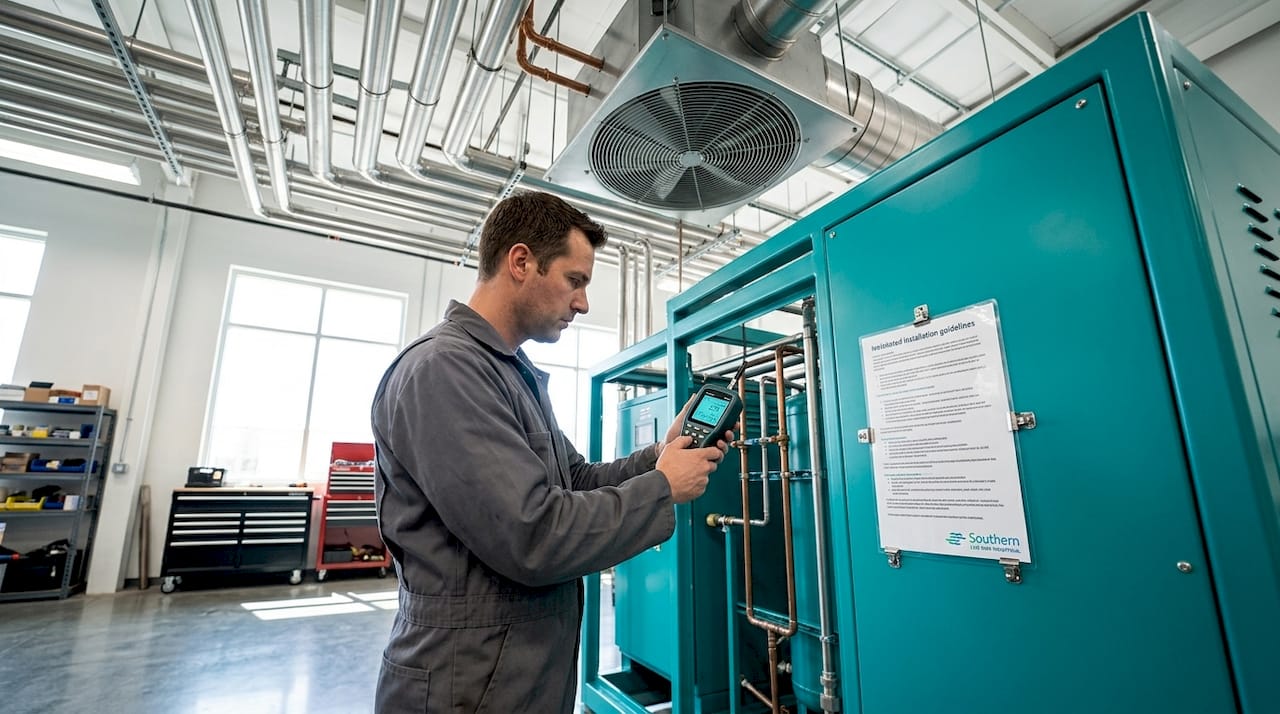
Pro Tip: Size your exhaust fans at least 20% above the calculated minimum. This accounts for duct losses, filter loading, and future generator capacity increases without requiring a ventilation redesign.
3. Hydrogen detection systems and sensor placement
Detection is the second line of defense after ventilation, and the placement of sensors is where many installations get it wrong. Hydrogen sensors must be positioned at the highest points in the room, typically within 12 inches of the ceiling, because hydrogen is lighter than air and will accumulate at ceiling level before reaching occupant height.
Beyond ceiling placement, sensors should also be located near known potential leak sources: generator fittings, hydrogen supply connections, and any pressure relief valve outlets. For rooms larger than 400 square feet, a single sensor is generally not sufficient. Most hydrogen generator safety standards call for multiple sensors to provide overlapping coverage and to prevent a single sensor failure from creating a detection blind spot.
| Sensor type | Certifications required | Best application |
|---|---|---|
| Catalytic bead | ATEX, UL Listed | General industrial, low-cost monitoring |
| Electrochemical | IECEx, CSA | Precision detection, lower H2 ranges |
| Thermal conductivity | FM Approved, ATEX | High-concentration environments |
| Solid-state (MOS) | UL Listed | Lab environments, compact installations |
Sensors must be explosion-proof in classified electrical areas and integrated with your ventilation interlock and automatic shutdown system. When a sensor triggers an alarm at a pre-set threshold (commonly 10% LEL or 0.4% hydrogen by volume), the control sequence should activate increased ventilation, alert operators, and halt generation if the concentration continues to rise. Calibration intervals are typically every six months, though some AHJs require quarterly verification.
4. Electrical classification and explosion-proof equipment
Hydrogen generator placement considerations must account for electrical area classification. Any space where hydrogen can accumulate above 1% by volume is classified as a Division 1 or Division 2 hazardous location under NEC Article 500, depending on whether the hazardous concentration is present continuously or only under fault conditions. All electrical equipment within the classified zone, including lighting, switches, motors, and control panels, must carry the appropriate explosion-proof or intrinsically safe rating.
This requirement extends to the generator itself. Review the equipment datasheet for the electrical classification boundary specified by the manufacturer. Some hydrogen generators for lab applications are designed for installation in non-classified spaces with the classified zone limited to the immediate enclosure, which can simplify your facility electrical upgrade scope significantly.
5. Water supply and quality requirements
Proton Exchange Membrane (PEM) hydrogen generators, which are the dominant technology in laboratory and light industrial applications, require deionized (DI) water as feedstock. Tap water will damage the membrane, reduce output purity, and void equipment warranties. Most PEM systems require water with a resistivity of at least 1 megohm-cm, with some high-purity models specifying 10 to 18 megohm-cm.
Your hydrogen generator setup must include a DI water supply system appropriately sized for generator consumption. A typical lab-grade PEM generator producing 500 mL per minute of hydrogen will consume roughly 4.5 mL of water per minute. That is manageable from a small point-of-use DI unit, but larger industrial hydrogen generators running continuous production at multi-liter per minute outputs require a central DI system with adequate storage and automatic regeneration.
6. Permitting, site preparation, and project timeline
Most facilities underestimate how long the permitting process takes. Commercial hydrogen generator installation projects typically require 8 to 16 weeks from initial permit submittal to commissioning approval, and that timeline assumes no requests for additional information from the AHJ.
The permits you will typically need include:
- Building permit for structural modifications or new equipment pads
- Electrical permit for service upgrades, classified area wiring, and interlock systems
- Mechanical/gas permit for ventilation systems and hydrogen piping
- Environmental permit if your hydrogen inventory or production rate triggers local air quality thresholds
Site preparation itself requires concrete pad construction to manufacturer-specified dimensions and load ratings, physical clearance distances from ignition sources and building openings per NFPA 2, and coordination of utility rough-ins before equipment delivery. Permit costs vary by jurisdiction, with electrical and mechanical permits typically ranging from $100 to $500 each, but complex sites in urban jurisdictions can see significantly higher fees.
7. Hydrogen piping and pressure system requirements
Hydrogen piping must be designed and installed to ASME B31.3 (Process Piping) standards. Acceptable materials are limited: stainless steel (316L is preferred), copper, and certain high-pressure rated thermoplastics in low-pressure supply lines. Carbon steel is not acceptable for hydrogen service due to hydrogen embrittlement concerns at operating pressures.
All joints must be welded or use compression fittings rated for hydrogen service. Threaded NPT connections without thread sealant approved for hydrogen service are a common source of leaks and are not compliant. After installation, the entire piping system must be pressure tested and leak-checked with an inert gas before hydrogen is introduced.
8. PEM vs. alkaline generator: installation impact comparison
The type of hydrogen generator you select has direct implications for your hydrogen generator installation checklist and overall compliance pathway.
| Criteria | PEM generator | Alkaline generator |
|---|---|---|
| Startup time | Less than 30 seconds | 15 to 30 minutes |
| KOH electrolyte handling | None required | Required (caustic, additional safety protocols) |
| Purity output | Up to 99.9999% | Typically 99.5 to 99.9% |
| Water quality requirement | DI water, high purity | Distilled or DI water |
| Footprint | Compact, lab-compatible | Larger, more suited for industrial scale |
| Installation complexity | Lower | Higher (electrolyte management, additional PPE requirements) |
PEM systems dominate lab and analytical applications for good reason: no caustic electrolyte handling, faster startup, and a smaller installation footprint. Alkaline systems become competitive at large production volumes where the capital cost advantage offsets the added installation complexity. The choice directly affects your ventilation sizing, chemical handling protocols, and required safety equipment, so it should be made before detailed engineering begins.
9. Commissioning, testing, and documentation requirements
A hydrogen generator installation is not complete at mechanical startup. Commissioning requires systematic verification that every safety interlock functions as designed: ventilation fan response to sensor triggers, automatic generator shutdown on ventilation failure, alarm panel operation, and emergency stop functionality. All of this must be documented in a commissioning report that your AHJ will typically require before issuing a certificate of occupancy or final permit sign-off.
Maintain a complete documentation package that includes: as-built drawings, equipment certifications, sensor calibration records, interlock test results, and the operations and maintenance manual. This package does more than satisfy the inspector. It becomes the foundation for future maintenance scheduling, insurance audits, and any modifications you make to the system down the line.
10. Ongoing maintenance and safety inspection schedule
Hydrogen generator safety standards do not stop at installation. Post-commissioning obligations include regular sensor calibration, ventilation system inspection, piping leak checks, and generator maintenance per the manufacturer’s schedule. Many facilities underestimate how much these recurring activities cost in labor and downtime, which is a real component of total cost of ownership that belongs in your initial budget analysis.
Establish a maintenance calendar before the system goes live. Most manufacturers specify monthly leak checks, semi-annual sensor calibration, and annual full system inspections. Some jurisdictions require third-party inspection of hydrogen systems on a defined cycle. Building these into your facility management program from day one prevents the scramble that happens when an inspection deadline appears unexpectedly.
What I’ve learned from real hydrogen generator installations
I’ve seen facilities invest significant budget in quality hydrogen generator equipment and then cut corners on two things: sensor placement and commissioning documentation. Both decisions come back to haunt them. A sensor mounted three feet below the ceiling in a room with ceiling-level air stratification is essentially a compliance checkbox, not an actual safety control. I’ve walked through installations where the sensor would never detect a ceiling-level accumulation until concentrations were already well above the alarm threshold.
On documentation: the facilities that breeze through re-inspections and insurance audits are the ones that treated their commissioning package as a living document from day one. Every calibration, every interlock test, every maintenance visit is logged. When the AHJ calls for a records review two years after installation, those operators answer from a position of confidence rather than scrambling through email threads.
My honest advice is to engage your mechanical and safety engineers before you finalize equipment selection. The generator choice affects ventilation sizing, electrical classification boundaries, and water system requirements. Starting those conversations after purchase creates expensive redesign cycles. Hydrogen safety compliance guidelines echo this point consistently: early cross-disciplinary coordination is the single most effective way to reduce project risk and total installation cost.
— Kris
Hydrogen generator solutions built for compliance from day one
SLI supplies hydrogen generators from Nel Hydrogen and LNI Swissgas, both of which carry the certifications and design features that streamline the compliance process described above. Whether you are equipping a gas chromatography lab, a fuel cell test stand, or an industrial production line, the equipment matters less than having the right system matched to your specific hydrogen generator installation requirements and facility configuration.
FAQ
What codes govern hydrogen generator installation?
NFPA 2, the International Fire Code, and OSHA 29 CFR 1910.119 are the primary governing standards. Local AHJ interpretations may add site-specific requirements beyond the base codes.
How long does a hydrogen generator installation take?
Most commercial installations take 8 to 16 weeks from permit application to commissioning, accounting for permit review cycles, site preparation, and final inspection scheduling.
Where should hydrogen sensors be placed?
Sensors should be mounted within 12 inches of the ceiling, because hydrogen rises, and near known potential leak sources such as fittings and pressure relief outlets.
Do hydrogen generators require explosion-proof electrical equipment?
Yes. Any space where hydrogen can accumulate above the 1% operational threshold is classified as a hazardous location, requiring explosion-proof or intrinsically safe electrical equipment within that zone.
What certifications should a hydrogen generator carry?
ANSI/CSA FC 1 and FC 6 are the most widely recognized certifications. Equipment with these certifications typically receives faster approval from authorities having jurisdiction and utilities.