Sticking to the right nitrogen generator service interval guidelines is one of the most direct ways to protect equipment uptime, maintain gas purity, and stay compliant with safety standards. Yet many facility operators and maintenance personnel struggle to balance scheduled service against production demands, often deferring maintenance until a component fails. That reactive approach carries real costs: unexpected downtime, purity drift in critical processes, and compliance gaps that auditors will find. This article gives you a clear, component-specific framework for building a nitrogen generator maintenance schedule that actually works in practice.
Table of Contents
- Key Takeaways
- 1. Factors that determine your service intervals
- 2. Service intervals for critical components
- 3. Component service interval comparison
- 4. Practical steps for managing your maintenance schedule
- My perspective on service interval discipline
- Keep your nitrogen generator performing with Getsli
- FAQ
Key Takeaways
| Point | Details |
|---|---|
| Follow manufacturer schedules | Manufacturer-recommended intervals protect warranty coverage and maximize equipment lifespan. |
| Replace filters every Annually | Filters are the first line of defense and the most frequently missed service item in most facilities. |
| Inspect membranes every 6 to 12 months | Membrane condition directly determines nitrogen purity output and should never be skipped. |
| Schedule one annual comprehensive service | A full annual inspection by qualified technicians covers sensors, valves, and wear parts in a single visit. |
| Log every service event | Maintenance logs let you spot degradation trends early and optimize future service timing. |
1. Factors that determine your service intervals
Not every nitrogen generator operates under the same conditions, which means a one-size-fits-all schedule will either over-maintain low-demand systems or under-maintain high-demand ones. Understanding the variables that drive interval decisions is the starting point for any credible nitrogen generator maintenance schedule.
The key criteria that shape your schedule include:
- Manufacturer recommendations and warranty terms. Following manufacturer schedules precisely is the single most reliable baseline. Deviating from those intervals, even with good intentions, can void warranty coverage and creates liability if a failure occurs.
- Operating hours and usage intensity. A generator running 24 hours a day, 7 days a week accumulates wear far faster than one operating in a single-shift environment. PSA systems in particular need hour-based tracking because molecular sieve and valve cycle counts determine replacement thresholds.
- Inlet air quality. Dirty, humid, or oil-contaminated compressed air accelerates filter loading, degrades membranes faster, and shortens molecular sieve life. Facilities in coastal Gulf Coast environments, where ambient humidity is high, often see compressed air quality issues that compress standard service intervals.
- Purity requirements and downstream application. A generator feeding a GC or LC-MS application must hold tighter purity tolerances than one used for blanketing. Higher purity demands mean more frequent verification checks and less tolerance for component drift.
- Regulatory and quality compliance requirements. ISO, FDA, and other framework audits often require documented service records at defined intervals. Compliance is not just about the generator performing well. It is about being able to prove it.
Maintenance logs deserve special mention here. A log that captures the date, technician, findings, and parts replaced on every service visit transforms reactive guesswork into data-driven scheduling. Over 12 to 24 months, patterns emerge: which filters clog faster in summer, which pressure sensors drift, and whether your sieve is degrading on the expected curve.
Pro Tip: Set a digital calendar reminder two weeks before every scheduled service date, not on the date itself. That buffer gives you time to order parts, coordinate technician availability, and avoid scrambling at the last minute.
2. Service intervals for critical components
This is where generic advice often fails maintenance personnel. High-level guidance like “service regularly” does not help you plan. Here is a component-by-component breakdown based on established nitrogen generator upkeep guidelines.
Membranes (membrane-type generators)
Membranes require inspection every 6 to 12 months, with replacement typically needed after 3 to 5 years of service. The inspection interval should be closer to 6 months in high-demand or high-humidity environments. Signs that a membrane bundle needs attention before the scheduled replacement window include unexpected purity drops, increased flow demand to maintain target purity, and visible exterior damage to housings.
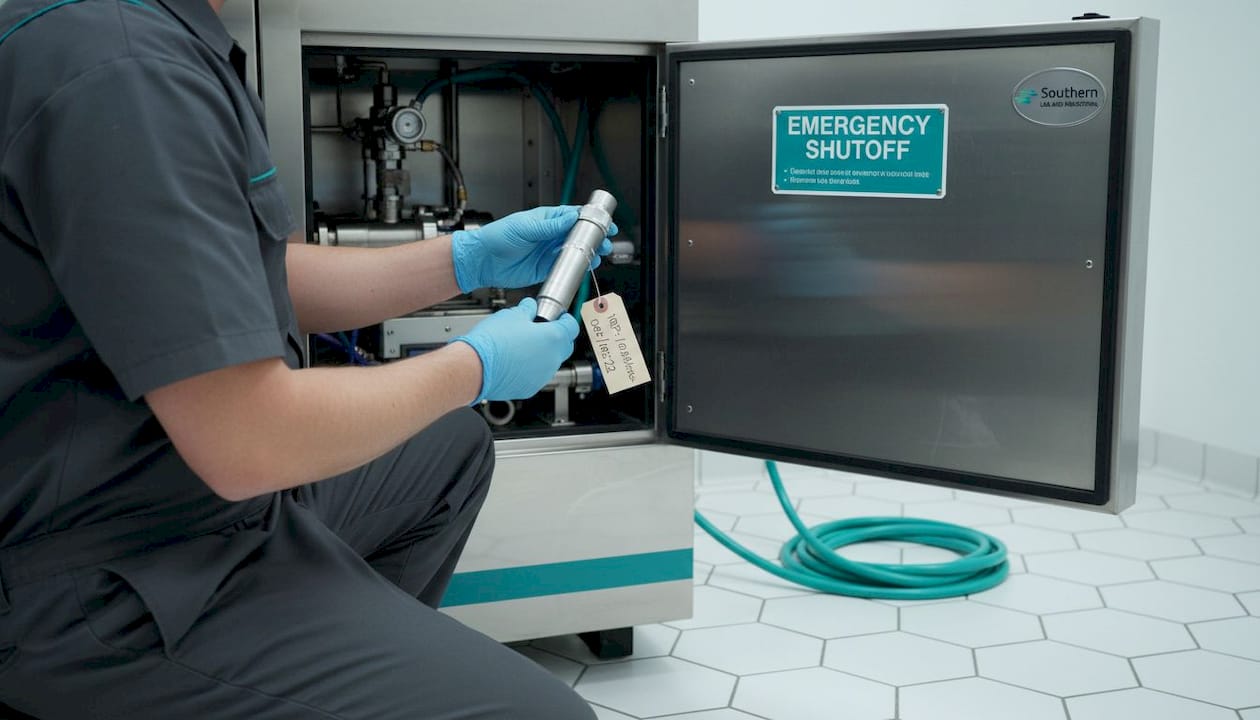
Molecular sieves in PSA systems
PSA nitrogen generators rely on carbon molecular sieve (CMS) beds that work on an adsorption cycle. Inspect molecular sieves annually and plan for replacement after 20,000 to 30,000 operating hours. There is an additional consideration that most service schedules overlook: CMS inventory gradually depletes at about 2 to 5% per year, which means most systems need a partial top-off of 10 to 15% of CMS volume every 3 to 5 years, even before a full replacement is warranted.
Filters
Filters are the most frequently serviced component and the one most often neglected between scheduled visits. Replace filters every 6 to 12 months depending on inlet air quality. In facilities where the compressed air system has known oil carryover or moisture issues, a 6-month replacement cycle is the safer choice. Always use original or high-quality OEM-equivalent parts. Substituting lower-grade filters to save cost is a false economy that puts downstream components at risk.
Valves and sensors
Solenoid valves and pressure sensors on PSA systems operate under high cycle counts and are prone to wear that is invisible until a fault occurs. Annual inspection by qualified technicians should include valve performance checks and sensor calibration. Oxygen sensors used for purity monitoring require calibration at least once per year, and some high-accuracy applications warrant semi-annual calibration.
Air intake filters and condensate drainage
Air intake filters on the compressor side need inspection every 3 months in dusty or humid environments. Condensate drainage is a daily or weekly task depending on your system setup. Drain condensate daily or weekly from air receivers and generator components to prevent internal corrosion. This is a 5-minute task that extends the life of components that cost thousands of dollars to replace.
Pro Tip: Track inlet air dew point as part of your weekly checks. A rising dew point often signals a failing dryer before any generator alarm triggers, giving you time to address the root cause before filters and sieves pay the price.
3. Component service interval comparison
The table below consolidates recommended service intervals for the major nitrogen generator components. Use it as the foundation for your nitrogen generator inspection frequency planning and adapt the intervals based on the usage and environmental factors covered in Section 1.
| Component | Inspection interval | Replacement interval | Key variables |
|---|---|---|---|
| Membranes | Every 6 to 12 months | 3 to 5 years | Humidity, purity demand, flow rate |
| Carbon molecular sieve (CMS) | Annually | 20,000 to 30,000 operating hours | Cycle rate, inlet air quality |
| CMS top-off (PSA systems) | Every 3 to 5 years | Partial, 10 to 15% volume | Operating hours, observed purity drift |
| Process filters | Every 3 to 6 months | Every 6 to 12 months | Inlet air quality, oil contamination |
| Solenoid valves | Annually | As needed based on wear | Cycle count, failure history |
| Oxygen purity sensors | Every 6 to 12 months | As needed, calibrate annually | Purity tolerance requirements |
| Air intake pre-filters | Every 3 months | Every 6 months | Dust load, ambient conditions |
| Condensate drain system | Weekly | Annually or as needed | Humidity, compressor condition |
This table gives you a one-page view of your nitrogen generator preventive maintenance obligations. Print it, post it near the generator, and use it as the working reference for your maintenance calendar.
4. Practical steps for managing your maintenance schedule
Knowing the intervals is only half the work. Implementing a service protocol for nitrogen generators that holds up under real operational pressures requires deliberate process design. Here is a numbered workflow that translates these guidelines into day-to-day practice.
- Create a maintenance calendar with layered reminders. Map every component’s service interval onto a shared calendar with reminder notifications at 30, 14, and 7 days before each event. Layer daily checks (condensate drain), weekly checks (inlet pressure, dew point), and semi-annual and annual visits in the same system.
- Maintain a physical and digital maintenance log. Every service event, whether a 5-minute condensate drain or a full annual inspection, gets a dated entry with findings and actions taken. This log is your first defense in a compliance audit and your best tool for identifying early degradation trends.
- Conduct daily operational checks. Verify flow rate, output pressure, and purity readings each morning before the system goes under peak load. Deviations from baseline are the earliest signal that something needs attention before the next scheduled service date. Monitoring inlet air quality regularly is part of this routine.
- Engage qualified technicians for annual comprehensive service. The annual visit should not be limited to a visual inspection. It needs to include sensor calibration, valve testing, filter replacement, and a full review of the maintenance log. This is the service where a technician with system-specific experience will catch what routine checks miss.
- Build a critical spare parts inventory. Keep at least one set of process filters, inlet pre-filters, and sensor calibration gases on-site at all times. The carrying cost of these spares is trivial compared to the cost of waiting on shipping during an unplanned stoppage.
- Review and adjust intervals annually. After each annual inspection, compare actual component condition against the expected condition based on your current intervals. If filters are arriving at their replacement date still in good condition, your inlet air quality is better than average and you may have room to extend. If sieves are degrading faster than projected, your cycle rate or air quality needs investigation.
- Weigh the total cost of ownership when making maintenance decisions. Deferring a $200 filter replacement to save time looks reasonable in isolation. Set against the cost of a purity failure in an LC-MS run or an ICP analysis, or the cost of an unplanned generator shutdown, that decision looks very different. Preventive maintenance is an investment with a clear payback period.
My perspective on service interval discipline
I’ve worked alongside facility operators who run generators for years without a single major failure, and I’ve seen facilities where a generator went down at the worst possible moment. The difference between those two outcomes almost always comes down to whether someone actually tracked service intervals or just assumed the equipment was fine because it was still running.
The most common pitfall I see is treating the annual service as the whole maintenance program. Operators complete the yearly inspection, check it off the list, and then do nothing for 12 months. That works until it doesn’t. In my experience, the facilities that avoid unplanned downtime are the ones that treat daily and weekly checks with the same seriousness as the annual service. Those 5-minute condensate drain checks and weekly purity verifications are what catch developing problems before they become failures.
I’ve also seen the cost of using non-OEM filter media. The upfront savings disappear quickly when you trace a purity failure back to a filter that didn’t meet the original specification. For facilities running NG Series generators or similar precision systems feeding analytical instruments, quality parts are not optional. They are part of the service protocol.
My honest recommendation: if you haven’t done a full review of your maintenance schedule in the last year, start with the comparison table in this article and work backward from your last service records. You will almost certainly find at least one component that is overdue.
— Kris
Keep your nitrogen generator performing with SLI
SLI supports laboratory and industrial facilities along the Gulf Coast with turnkey nitrogen generator solutions and ongoing maintenance programs. Whether you need a scheduled maintenance plan, a comprehensive annual service by qualified technicians, or original replacement parts for your existing system, Getsli’s team is equipped to keep your generator operating at specification. Explore the full range of laboratory gas generator solutions including hydrogen, nitrogen, and zero air systems designed for demanding analytical applications. For facilities that want professional support aligned with manufacturer service interval guidelines, Getsli’s service and support programs provide scheduled visits, documentation for compliance, and local technical expertise when you need it.
FAQ
How often should a nitrogen generator be serviced?
Most nitrogen generators require daily condensate checks, filter replacement every 6 to 12 months, and a full annual service that covers sensors, valves, and wear parts. PSA systems also need molecular sieve inspection every year with replacement planned at 20,000 to 30,000 operating hours.
What are the signs a nitrogen generator needs early maintenance?
Unexpected drops in output purity, increased flow demand to reach target pressure, or rising inlet dew point readings are the most reliable early indicators. Any deviation from baseline operational readings warrants investigation before the next scheduled service date.
How long do molecular sieves last in a PSA nitrogen generator?
Carbon molecular sieve beds typically last 20,000 to 30,000 operating hours before full replacement is needed. Most systems also require a partial CMS top-off of 10 to 15% of bed volume every 3 to 5 years as gradual depletion occurs at a rate of roughly 2 to 5% per year.
Do membrane nitrogen generators need the same service as PSA systems?
The core service tasks overlap, particularly filters, condensate management, and annual comprehensive inspections. However, membrane generators do not have molecular sieves. Their primary component-specific requirement is membrane inspection every 6 to 12 months, with replacement typically needed after 3 to 5 years.
Why does inlet air quality affect service intervals?
Poor inlet air quality, specifically high moisture, oil carryover, or particulate load, accelerates filter clogging, degrades membranes faster, and shortens CMS life in PSA systems. Maintaining a clean, dry compressed air supply is the most cost-effective way to extend service intervals across all generator components.