A gas generator performance benchmarks list is a structured set of metrics, including electrical efficiency, fuel consumption, noise output, and load handling, that laboratory managers and facility operators use to compare and select generators for professional environments. The best gas generator models for analytical labs are not chosen by nameplate power alone. Generators from manufacturers like Cat and Honda must be evaluated across multiple performance dimensions before they earn a place in a critical facility. This article covers the key metrics, top models, load behavior, and selection factors that belong in every facility operator’s evaluation process.
What key metrics belong in a gas generator performance benchmarks list?
Electrical efficiency is the most important single metric on any gas generator performance benchmarks list. Modern methane-fueled gas engines achieve electrical efficiency between 35% and 45%, with cogeneration setups reaching over 90% total system efficiency. That range is wide enough to make a material difference in annual operating costs for a facility running continuous analytical instruments.
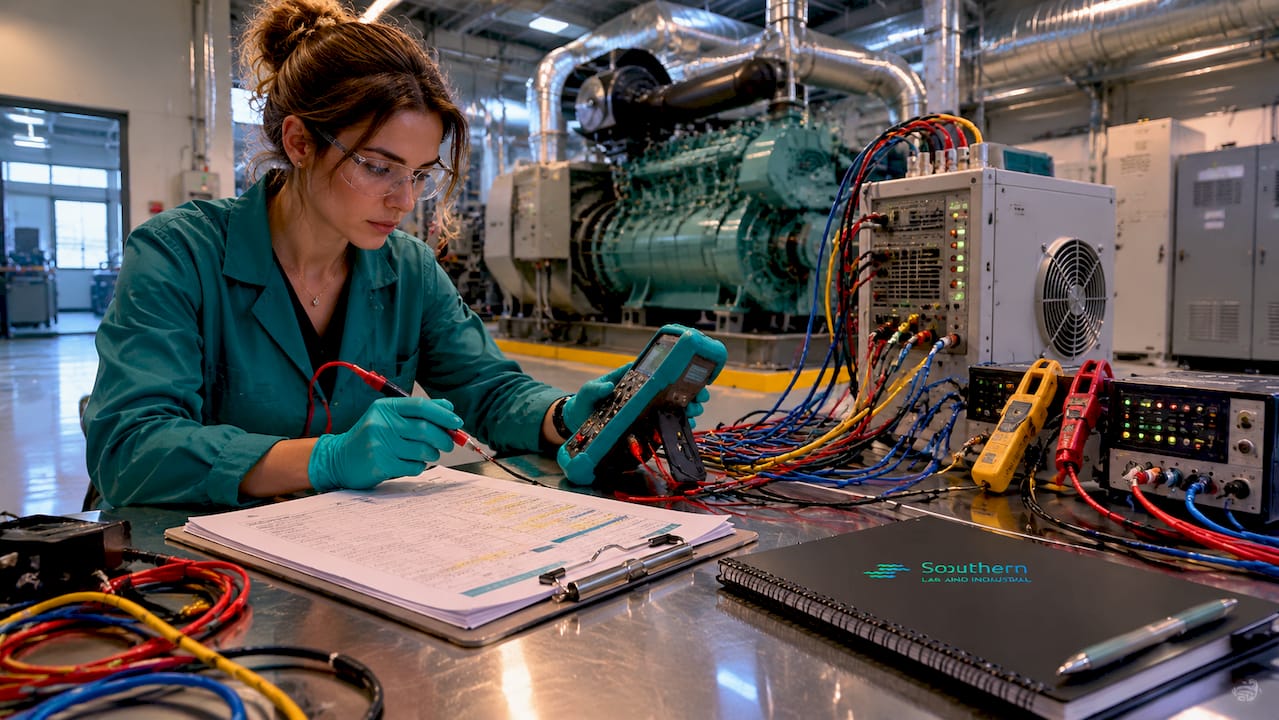
Facility managers should assess gas generator efficiency through thermal, electrical, and fuel conversion lenses simultaneously to avoid misleading conclusions. A generator that looks strong on thermal efficiency may still underperform at the terminals where your instruments actually draw power.
The core metrics to include in any benchmark evaluation are:
- Electrical efficiency at generator terminals: Accounts for alternator and wiring losses. Always lower than flywheel efficiency.
- Fuel consumption rate: Measured at 25%, 50%, 75%, and 100% load to reflect real operating conditions.
- Noise output (dB): Critical for enclosed lab environments and personnel safety.
- Load handling and voltage stability: Behavior under sudden load spikes from compressors or motors.
- EPA Tier rating: Determines emissions compliance and may affect your facility’s operating license.
- Fuel conversion efficiency: Affected by methane content in the gas supply, especially relevant when biogas is involved.
Pro Tip: Request the full efficiency curve from the manufacturer, not just the peak efficiency figure. A generator rated at 44% efficiency may drop to 36% at partial load, which is where most standby units actually operate.
Top gas generator models benchmarked for laboratory and industrial use
The Cat CG series represents the current standard for stationary industrial gas generator performance. The Cat CG170B-16 achieves 44.7% electrical efficiency on natural gas, while the CG132B-12 delivers 43.3%. Those figures place both models near the top of the efficiency range for methane-fueled industrial generators.
For portable and laboratory support applications, the Honda EU2200i sets the benchmark for noise and efficiency in its class. Inverter generators like the EU2200i operate at 48–57 dB, compared to 70–80 dB for conventional portable units. That difference is significant in a lab where personnel work in close proximity to the equipment.
| Model | Type | Electrical Efficiency | Noise Level | Best Use Case |
|---|---|---|---|---|
| Cat CG170B-16 | Stationary industrial | 44.7% | Not publicly listed | Large facility, continuous load |
| Cat CG132B-12 | Stationary industrial | 43.3% | Not publicly listed | Mid-size industrial facility |
| Honda EU2200i | Portable inverter | Not publicly listed | 48–57 dB | Lab support, portable backup |
Key performance markers to verify for any model under review:
- EPA Tier rating: EPA Tier ratings specify allowable pollutant levels and directly affect whether a generator can legally operate in your facility or jurisdiction.
- Amperage output at rated load: Confirms the generator can sustain your instrument panel’s draw without voltage sag.
- Runtime at 50% load: A more realistic operating scenario than rated full-load runtime.
- Alternator efficiency class: IE2 or IE3 class alternators reduce conversion losses at the terminal.
Pro Tip: Never evaluate a generator on a single-point efficiency rating. Ask the supplier for the full load curve across 25%, 50%, 75%, and 100% load. A model that peaks at 44% but drops sharply at partial load will cost more to run than a model rated at 42% with a flat efficiency curve.
How do load conditions affect gas generator performance benchmarks?
Load conditions are the single most misunderstood variable in gas generator performance reviews. Standby generators typically operate at 40–75% of rated load in real-world facility settings. That means the full-load efficiency figure printed on a spec sheet rarely reflects what you will actually see in operation.
Many generators perform best at 70–80% load. Benchmarking efficiency only at full rated load can mask significant partial load inefficiencies that show up as higher fuel bills and more frequent maintenance cycles. The table below illustrates how efficiency typically shifts across load levels for an industrial gas generator.
| Load Level | Typical Efficiency Range | Notes |
|---|---|---|
| 25% | 30–35% | Inefficient; avoid sustained operation here |
| 50% | 37–41% | Acceptable for intermittent standby use |
| 75% | 41–44% | Near-optimal for most industrial models |
| 100% | 42–44% | Peak nameplate efficiency; rarely sustained |
Real-world testing with load banks and appliance voltage spike simulations reveals performance gaps that static spec sheets never show. Voltage spike load testing simulates conditions where compressors or motors start suddenly, stressing the generator and exposing stability differences between models. A generator that holds voltage within 5% during a spike is meaningfully more reliable than one that dips 12% under the same condition.
Auxiliary system loads also reduce net electrical output. Cooling fans, control systems, and wiring runs between the generator and the load panel all consume power before it reaches your instruments. Facilities should account for these losses when sizing a generator, typically adding 5–8% to the calculated load requirement.
Pro Tip: When running load bank tests, simulate your actual instrument startup sequence, not just a steady resistive load. GC systems, ICP instruments, and FTIR spectrometers each create distinct inrush current profiles that stress generators differently.
What factors beyond raw benchmarks should labs consider when selecting a gas generator?
Raw performance data is necessary but not sufficient for a sound purchasing decision. Several operational factors sit outside the benchmark table but carry equal weight in total cost of ownership.
Fuel quality and methane content directly affect efficiency and engine calibration requirements. Methane content variance in natural gas versus biogas can cause a 5–8% efficiency drop without engine recalibration. If your facility uses biogas or a blended fuel source, verify that the generator’s engine management system can compensate automatically.
Additional factors that belong in every lab manager’s evaluation:
- Emissions compliance: EPA Tier ratings impact emissions compliance and may affect your facility’s operating license. Confirm the generator’s Tier rating matches your local air quality permit requirements before purchasing.
- Noise mitigation: Enclosures, acoustic baffles, and generator placement all affect noise at the point of work. For enclosed lab spaces, target generators rated below 65 dB at 7 meters.
- Supplier qualification: Factory acceptance testing (FAT) before delivery verifies that the unit meets its published specs. Review the supplier qualification steps before committing to a vendor.
- Maintenance intervals and parts availability: A generator with a 2,000-hour oil change interval costs less to maintain than one requiring service every 500 hours. Confirm parts availability for your region.
- Integration with existing gas systems: Fuel line sizing, pressure regulation, and connection to existing gas generation systems all affect whether a generator performs to spec after installation.
- Lifecycle cost: Calculate the total cost of ownership over a 10-year horizon, including fuel, maintenance, and downtime costs. A generator with a lower purchase price but higher fuel consumption often costs more over its operating life.
Independent lab testing including stress scenarios better reveals generator performance reliability than datasheet numbers alone. Require third-party test reports or conduct your own load bank evaluation before final approval.
Key takeaways
A gas generator’s true performance is defined by electrical efficiency at the terminals, load behavior across the full operating range, and fuel quality compatibility, not by its nameplate rating alone.
| Point | Details |
|---|---|
| Use terminal efficiency, not flywheel ratings | Electrical efficiency at the terminals is 2–5% lower and reflects actual usable output. |
| Benchmark across all load levels | Efficiency at 75% load is more relevant than peak efficiency for most standby applications. |
| Verify EPA Tier compliance early | Tier ratings affect operating licenses; confirm before purchasing, not after. |
| Account for fuel quality variation | Biogas or blended fuel without recalibration can cut efficiency by 5–8%. |
| Require stress testing, not just spec sheets | Voltage spike tests reveal reliability differences that static data never shows. |
What I’ve learned from evaluating gas generator benchmarks in lab settings
The most common mistake I see facility managers make is accepting a single efficiency number from a manufacturer’s brochure and treating it as the whole story. That number is almost always measured at full load, under ideal fuel conditions, at the engine flywheel. By the time power reaches your GC or ICP instrument, you may be looking at a figure 5–8 percentage points lower.
The second issue is fuel. Labs along the Gulf Coast often have access to natural gas with varying methane content depending on the pipeline and season. A generator calibrated for 95% methane natural gas will underperform on a 90% methane supply without adjustment. That is a real operating cost that never appears in a top gas generator comparison table.
My recommendation is to build your own benchmark checklist before talking to any supplier. Include electrical efficiency at 50% and 75% load, noise at 7 meters, voltage stability under inrush, EPA Tier rating, and fuel flexibility. Then require documentation for each item. Suppliers who cannot provide full load curves or third-party test reports are telling you something important about how they stand behind their equipment.
The real-world integration challenges that show up after installation, from voltage sag to fuel pressure drops, are almost always predictable from a thorough pre-purchase evaluation. Do the work upfront and you avoid the costly surprises later.
— Kris
SLI’s laboratory gas generator solutions for Gulf Coast facilities
SLI specializes in on-site gas generation systems for analytical laboratories and industrial facilities, with a product range covering hydrogen, nitrogen, and zero air generators from partners including LNI Swissgas and Nel Hydrogen. Every system is designed to replace cylinder-based gas supplies and deliver continuous, high-purity gas to instruments like GC, LCMS, ICP, and FTIR.

For facility operators working through generator selection, SLI provides turnkey installation, local technical support, and ongoing maintenance across the Gulf Coast region. The team also supports supplier qualification and factory acceptance testing to verify that every unit meets its published performance specs before it goes into service. If you are ready to move from benchmark data to a working system, the laboratory gas generator solutions at SLI cover the full range of lab and industrial applications.
FAQ
What is electrical efficiency in a gas generator?
Electrical efficiency is the percentage of fuel energy converted to usable electrical output at the generator terminals. Modern methane-fueled gas generators achieve 35–45% electrical efficiency, with the terminal figure running 2–5% below engine flywheel efficiency due to alternator and wiring losses.
Why does load level affect gas generator efficiency?
Generators are most efficient at 70–80% of rated load. Operating below 40% load causes fuel consumption to rise relative to output, while sustained full-load operation accelerates wear without proportional efficiency gains.
What is an EPA Tier rating for gas generators?
An EPA Tier rating specifies the maximum allowable pollutant emissions for a generator engine. Higher Tier numbers indicate stricter emissions limits. The Tier rating affects whether a generator can legally operate under your facility’s air quality permit.
How does fuel quality affect gas generator performance?
Methane content variance between natural gas and biogas can cause a 5–8% efficiency drop without engine recalibration. Facilities using blended or biogas fuel sources should confirm that the generator’s engine management system adjusts automatically for methane content changes.
What is the best way to verify a gas generator’s published specs?
Require a full efficiency load curve covering 25%, 50%, 75%, and 100% load, plus third-party test reports or a factory acceptance test. Voltage spike testing under realistic inrush conditions reveals reliability differences that static spec sheets do not capture.