Electrical requirements for gas generation systems are defined by mandatory compliance with NFPA 37, NFPA 110, and National Electrical Code Articles 445, 700, 701, and 702. These standards govern everything from generator grounding and automatic transfer switch wiring to emergency load classification and auxiliary circuit design. Getting any one of these wrong does not just create an inspection failure. It creates a liability. This article gives engineering teams a code-backed, practical breakdown of every major electrical requirement that applies to stationary gas generation installations in 2026.
1. Electrical requirements for gas generation systems: the code foundation
The regulatory framework for gas generation electrical design is not optional, and it is not open to interpretation. NFPA 37, NFPA 110, and NEC Articles 445, 700, 701, and 702 form the non-negotiable baseline for any stationary installation. Each standard addresses a distinct layer of the system, and all of them apply simultaneously.
Here is what each code governs in practice:
- NEC Article 445 covers generator installation requirements, including conductor sizing, overcurrent protection, and grounding of the generator frame and neutral.
- NEC Article 700 defines Emergency Systems, which must transfer loads within 10 seconds. Hospitals, egress lighting, and life-safety circuits fall here.
- NEC Article 701 covers Legally Required Standby Systems, which serve loads mandated by municipal or state codes but not classified as life-safety.
- NEC Article 702 governs Optional Standby Systems, which protect loads selected by the owner rather than required by code.
- NFPA 110 sets minimum performance standards for Emergency and Standby Power Systems, including transfer time, fuel supply duration, and load testing intervals.
- NFPA 37 addresses the mechanical and fuel-side installation of stationary combustion engines, with direct implications for electrical clearances and ventilation.
- NEC Article 250 specifies grounding and bonding rules, including the use of ground rods bonded to equipment grounding conductors.
Designers must differentiate Optional, Legally Required, and Emergency standby systems because each classification dictates different transfer switch specifications and transfer time limits. Misclassifying a system is one of the most common and costly errors in gas generation electrical design. The AHJ will catch it during inspection, and the correction typically requires rewiring the ATS and resubmitting permits.
Pro Tip: Document the system classification in your permit drawings before submitting. AHJs increasingly require the NEC article classification to appear on the single-line diagram, not just in the specification narrative.
2. Gas supply pressure and its direct impact on electrical design
Gas supply stability is not a mechanical concern alone. Pressure deficiencies in the fuel supply manifest directly as electrical faults, false alarms, and failed starts. Understanding the pressure requirements for gas systems is a prerequisite for sound electrical design.
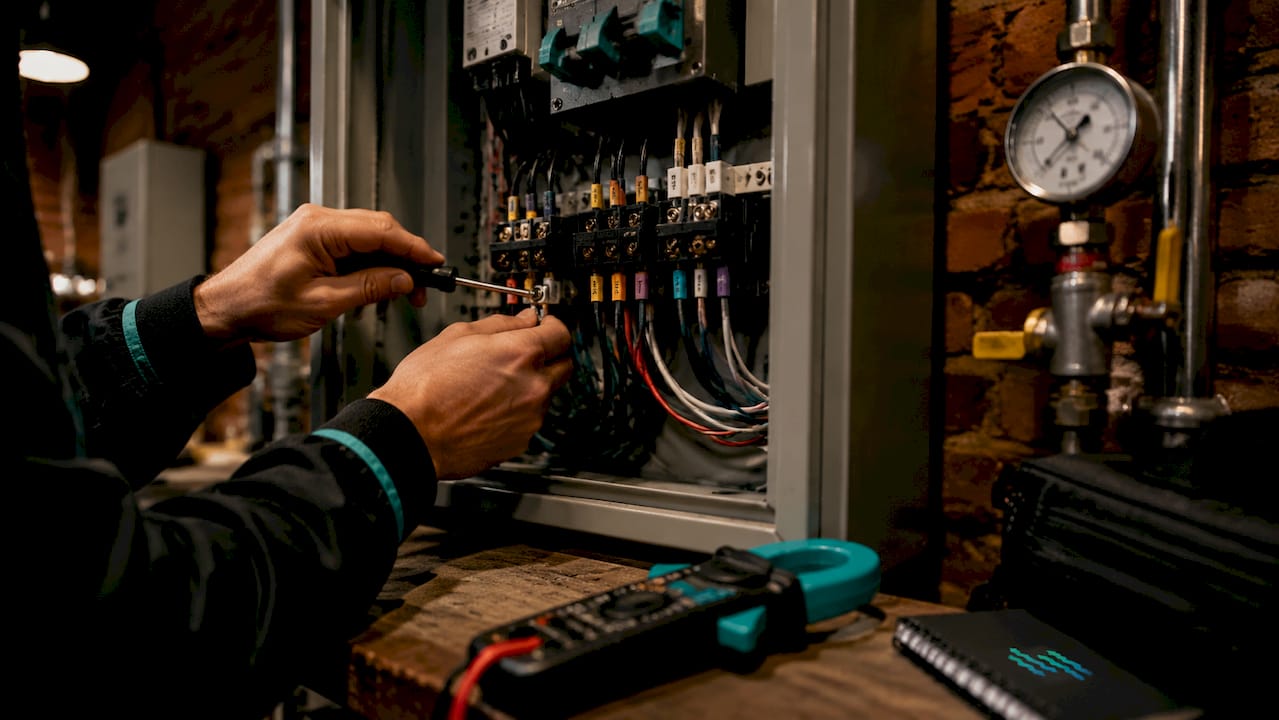
The maximum allowable pressure drop for a natural gas supply system is 0.5 inches water column. Most stationary generators require an inlet pressure between 11 and 14 inches w.c. to operate correctly. If the gas piping is undersized and pressure drops below that threshold under load, the engine governor compensates by drawing more current from auxiliary circuits, which can trigger nuisance trips on dedicated electrical circuits.
The Longest Length Method under NFPA 54 is the standard pipe sizing approach that prevents these pressure drop issues. It sizes piping based on the total developed length from the meter to the appliance inlet, accounting for all fittings. Skipping this calculation and using a rule-of-thumb pipe size is a documented cause of generator underperformance that gets misdiagnosed as an electrical fault. For more detail on how gas delivery rates interact with system design, the SLI resource on gas delivery requirements covers the engineering specifics.
Gas supply instability also affects auxiliary electrical loads. Block heaters and battery chargers draw continuous current, and if the generator is cycling on and off due to fuel pressure issues, those circuits experience repeated inrush events that shorten component life. Stable gas pressure is, in effect, a prerequisite for stable electrical performance across the entire system.
Pro Tip: Specify a gas pressure regulator with a lockup pressure rating at least 2 inches w.c. above the generator’s minimum inlet requirement. This buffer absorbs supply fluctuations without triggering low-pressure shutdowns.
3. Automatic transfer switch installation: wiring, grounding, and common failures
The automatic transfer switch is the most electrically complex component in a gas generation system, and it is the most common source of inspection failures. Getting the ATS right requires attention to switch type, grounding configuration, CT installation, and physical placement.
The choice between a 3-pole and 4-pole transfer switch is not arbitrary. It is determined by whether the generator is a separately derived system. A 4-pole switch provides a switched neutral, which is required when the generator neutral is bonded to ground at the generator frame. Neutral-ground bonding errors typically stem from selecting the wrong switch type. Using a 3-pole switch with a separately derived system leaves the neutral bonded at two points simultaneously, creating ground fault detection errors and potential shock hazards.
Current transformer installation is another frequent failure point. Reversed CT polarity prevents the ATS from correctly sensing load current, which causes automatic load transfer to fail. The fix is straightforward during commissioning, but it requires a deliberate verification step that many teams skip under schedule pressure.
The following installation steps reduce ATS-related inspection failures:
- Confirm system classification (Emergency, Legally Required, or Optional Standby) before specifying the ATS.
- Determine neutral bonding configuration and select 3-pole or 4-pole accordingly.
- Size load cables per generator ampacity rating and account for voltage drop over the run distance.
- Place the ATS as close to the main panel as the layout allows, maintaining NEC 110.26 clearance of at least 3 feet in front of the equipment.
- Verify CT orientation before energizing. Mark the polarity on the CT body with a permanent marker during installation.
- Test automatic operation by simulating a utility outage. Per NFPA 110, emergency systems must transfer within 10 seconds.
Pro Tip: Request the ATS manufacturer’s commissioning checklist before installation begins. Manufacturers like Cummins, Kohler, and Eaton publish detailed CT verification and neutral bonding procedures that are more specific than the NEC language alone.
4. Auxiliary electrical systems that determine generator reliability
Auxiliary electrical loads are the circuits that keep the generator ready to start, not the circuits it powers after starting. They are frequently omitted from early electrical designs and then added as afterthoughts, which creates wiring that fails inspection or performs unreliably in the field.
The core auxiliary circuits for a gas-powered generator installation include:
- Block heater circuit: Typically 120V or 240V, this circuit keeps the engine coolant warm so the generator can reach operating temperature quickly after a start command. In Gulf Coast climates, this circuit is still relevant during winter cold snaps that push ambient temperatures below 40°F.
- Battery charger circuit: Dedicated circuits for battery chargers require approximately 5A at 120V. The starting battery must remain at full charge continuously. A discharged battery is the leading cause of “no-start” faults in otherwise well-maintained generators.
- Space heater circuit: Enclosure space heaters prevent condensation on electrical components inside the generator control panel. These are typically 120V circuits with a thermostat control.
- Coolant heater circuit: Separate from the block heater in some larger units, this circuit maintains jacket water temperature and is especially relevant for generators above 100 kW.
Neglecting auxiliary load circuitry is a documented cause of starter failure and maintenance callbacks that are expensive to diagnose after commissioning. The SLI guide on startup sequence pitfalls details how auxiliary circuit failures present during the startup sequence and how to distinguish them from fuel or control faults.
All auxiliary circuits should be fed from a source that remains energized during a utility outage. Feeding them from the load side of the ATS defeats their purpose entirely.
5. Permits, inspections, and testing before commissioning
Electrical permitting for gas generation systems is a multi-stage process that runs parallel to mechanical permitting. Electrical permits for gas generators cost between $150 and $800 for most commercial projects, and the full cycle from permit application through startup typically runs 8 to 16 weeks. Planning for that timeline at project kickoff prevents the schedule compression that causes electrical shortcuts.
The table below outlines the key inspection stages and their primary focus areas:
| Inspection Stage | Primary Focus Areas |
|---|---|
| Rough-in electrical | Conduit routing, wire sizing, junction box placement, grounding electrode installation |
| Final electrical | Labeled wiring, NEC 110.26 clearances, neutral bonding verification, CT polarity |
| Utility interconnection | Metering, service entrance compliance, utility-side ATS connections |
| Load bank testing | Full-load operation, voltage and frequency stability, ATS transfer timing |
| AHJ final sign-off | Combined mechanical and electrical compliance, NFPA 37 and NFPA 110 documentation |
The AHJ enforces concurrent inspections of mechanical and electrical systems, which means a deficiency on the mechanical side can hold up electrical sign-off. Early coordination between the electrical engineer of record and the mechanical contractor is not a best practice. It is a schedule requirement. Load bank testing at 100% rated load for a minimum of two hours is standard practice before commissioning, and it surfaces voltage regulation issues, governor response problems, and ATS transfer timing errors that bench testing cannot replicate.
Common inspection failure points include unlabeled conductors, missing grounding electrode conductor connections, ATS clearance violations, and reversed CT installations. Each of these is preventable with a pre-inspection walkthrough against the NEC checklist. For a detailed look at how these challenges play out on real projects, the SLI resource on integration challenges covers documented case examples from industrial installations.
Key takeaways
Reliable gas generation electrical design requires simultaneous compliance with NEC Articles 445, 700, 701, and 702, NFPA 37, and NFPA 110, with correct ATS selection, grounding, auxiliary circuits, and pressure-stable fuel supply as the non-negotiable execution requirements.
| Point | Details |
|---|---|
| Code classification matters | Correctly classifying the system under NEC Articles 700, 701, or 702 determines ATS specs and transfer time requirements. |
| ATS selection drives grounding | The choice between 3-pole and 4-pole switches must match the neutral bonding configuration to avoid ground faults. |
| Gas pressure affects electrical performance | Pressure drops below 11 inches w.c. at the generator inlet cause electrical faults that are often misdiagnosed. |
| Auxiliary circuits are not optional | Block heater and battery charger circuits are required for reliable starts and must be fed from a continuously energized source. |
| Permit timelines require early action | Commercial electrical permits take 8 to 16 weeks. Submitting complete drawings at project kickoff is the only way to protect the schedule. |
What I’ve learned from watching electrical designs fail at the finish line
I have seen well-engineered gas generation projects stall at final inspection because of issues that had nothing to do with the generator itself. A reversed CT here, a missing grounding electrode conductor there, and suddenly a project that was weeks from commissioning is back in the permit queue. The pattern is consistent enough that I now treat the electrical design review as a separate discipline from the mechanical design review, even on projects where one engineer covers both.
The most underestimated risk in gas generation electrical design is the assumption that the ATS is a commodity item. It is not. The neutral bonding decision alone has downstream consequences for ground fault protection, code compliance, and long-term system behavior. I have watched facilities run for months with a neutral bonded at two points because the original installer used a 3-pole switch on a separately derived system. The system appeared to work. It was not safe, and it would not have passed a rigorous inspection.
Auxiliary circuits deserve the same attention as the main power circuits. A generator that fails to start because the battery charger circuit was fed from the wrong source is not a generator problem. It is an electrical design problem. The fix is inexpensive during design and expensive after commissioning.
My consistent recommendation is to submit permit drawings with the system classification, ATS type, neutral bonding diagram, and auxiliary circuit schedule all on the same sheet. AHJs approve packages faster when the documentation answers their questions before they ask them. That single habit has shortened permit timelines on more projects than any other practice I can point to.
— Kris
How SLI supports electrical compliance for gas generation projects
Engineering teams working through gas generation electrical design challenges do not have to start from scratch on every project. SLI works directly with industrial facilities and analytical laboratories along the Gulf Coast to address the integration challenges that slow projects down.
SLI’s technical team has documented the most common electrical integration failures across real installations, and that experience is available to engineering teams evaluating system configurations, ATS selection, and auxiliary circuit design. The SLI resource on real-world integration challenges covers permit timelines, transfer switch pitfalls, and control panel integration issues drawn from actual project experience. For facilities evaluating on-site gas generation for laboratory instruments, SLI’s lab gas generation solutions page covers the full range of hydrogen, nitrogen, and zero air systems with the electrical specifications engineers need for design.
FAQ
What NEC articles apply to gas generator installations?
NEC Articles 445, 700, 701, 702, and 250 all apply to gas generator installations. Article 445 covers the generator itself, Articles 700 through 702 classify the standby system type, and Article 250 governs grounding and bonding.
How quickly must an emergency generator transfer loads?
Emergency systems classified under NEC Article 700 and NFPA 110 must transfer loads within 10 seconds of a utility outage. Legally Required and Optional Standby systems have different transfer time requirements based on the loads they serve.
What causes neutral bonding errors in ATS installations?
Neutral bonding errors occur when a 3-pole transfer switch is used with a separately derived generator system that requires a switched neutral. The correct solution is a 4-pole switch that opens the neutral during transfer, preventing dual neutral-ground bonds.
Why do gas pressure problems look like electrical faults?
When inlet gas pressure drops below the generator’s minimum requirement of 11 to 14 inches w.c., the engine misfires or shuts down on a low-fuel alarm, which the control system logs as an electrical or control fault. Verifying gas pressure at the inlet is a required step in any electrical fault diagnosis.
What permits are required for ATS and panel integration?
Commercial gas generator installations require a separate electrical permit covering ATS installation and panel integration, typically costing between $150 and $800. The permit requires a single-line diagram showing system classification, ATS type, and grounding configuration.
Recommended
- Gas Generator Integration Challenges: Real-World Examples – getsli.com
- Laboratory Gas Generators | Hydrogen, Nitrogen & Zero Air | Southern Laboratory and Industrial
- How Gas Generator Startup Sequence Works: A Technical Guide – getsli.com
- Gas Generator Flow Rate: What Engineers Need to Know – getsli.com