A generator service interval is the scheduled maintenance threshold, measured in runtime hours or calendar time, at which specific maintenance tasks must be performed to preserve reliable operation. Most facility managers know they need to service their generators, but the real question is when and how often. Get this wrong and you risk a generator that fails exactly when you need it most. This guide covers standard intervals by generator type, how environmental and operational factors shift those schedules, and how to build a documentation system that holds up under audit.
What is a generator service interval?
A generator service interval is the defined point, either by hours of operation or elapsed calendar time, at which a generator requires scheduled maintenance. The industry term you will see in manufacturer manuals and NFPA 110 compliance documents is “preventive maintenance interval” or “PM interval.” Both terms describe the same principle: maintenance is triggered by whichever threshold arrives first, runtime hours or calendar time.
Standby generators require service annually or every 100–200 hours, while industrial and prime power units have longer intervals of 200–500 hours. That difference reflects how each generator type accumulates wear. A standby unit may run only a few hours per year during tests and outages, so calendar time becomes the dominant trigger. An industrial generator running continuous shifts accumulates hours fast, making runtime the controlling factor.
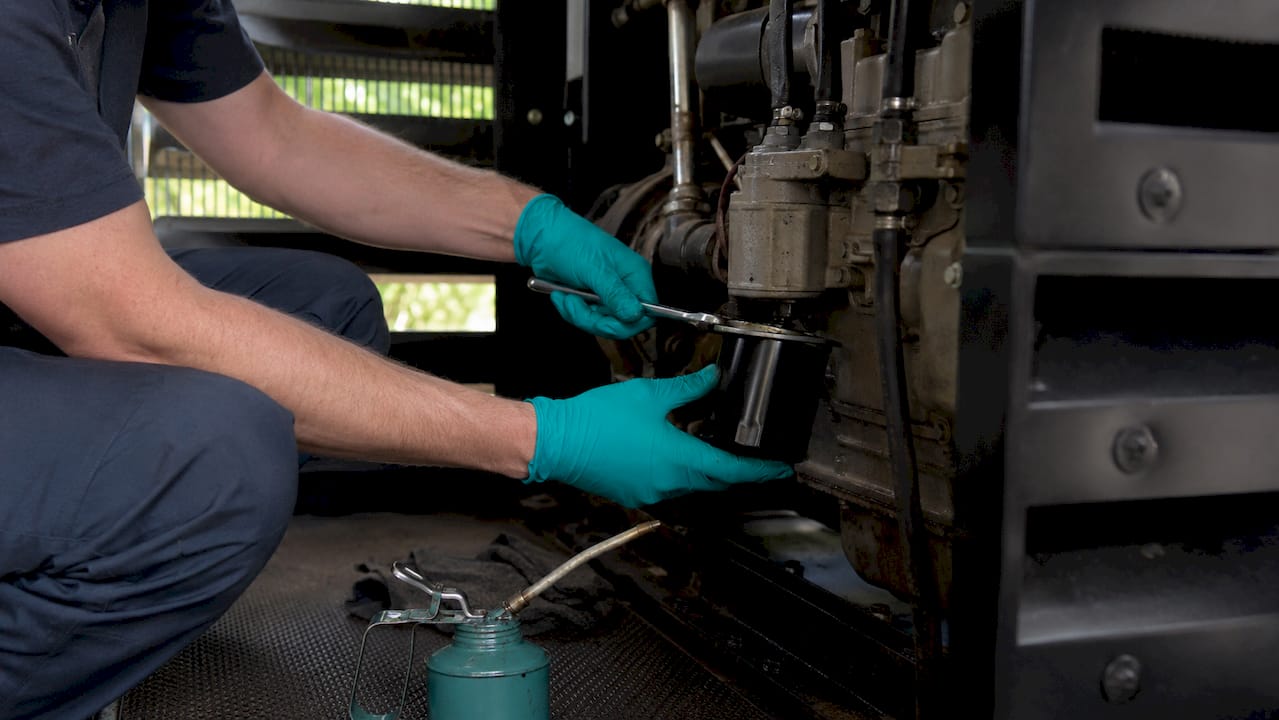
The reason dual triggers matter is that components deteriorate even when a generator sits idle. Moisture, corrosion, and fuel degradation occur on a calendar, not a runtime clock. Standby generators need calendar-based maintenance even when rarely run, because moisture and corrosion degrade components over time regardless of hours logged.
Service intervals by generator type
Standard intervals vary by generator class, engine design, and intended use. The table below summarizes typical schedules based on manufacturer guidance from Generac, Kohler, and Caterpillar, as well as industry standards.
| Generator Type | Runtime Trigger | Calendar Trigger | First Oil Change |
|---|---|---|---|
| Residential standby | 100–200 hours | Annually | 5–25 hours |
| Commercial standby | 100–200 hours | Annually | 5–25 hours |
| Industrial / prime power | 200–500 hours | Annually or semi-annually | 5–25 hours |
| Portable / rental | Every 100 hours or less | Annually | 5 hours |
Portable generators deserve special attention. Portable units running faster engines require oil changes every 100 hours or less due to higher RPM and heat generation. Some models recommend a first oil change after just 5 hours to flush manufacturing residues from new engine components. Skipping that break-in change is one of the most common mistakes facility teams make with newly commissioned units.
For industrial generators operating as prime power, the 200–500 hour window reflects heavier-duty engine construction and larger oil capacity. However, annual calendar inspections still apply even if the unit has not reached its hour threshold.
Pro Tip: Set your maintenance management system to flag whichever trigger arrives first. A generator that runs 50 hours in a year still needs its annual inspection, even though it is far from its 200-hour runtime threshold.
How environment and operations shift service frequency
Standard OEM maintenance schedules assume moderate operating conditions, typically 40°F–85°F with clean, dry air. Real-world industrial facilities rarely match those assumptions. Environmental factors like coastal salt air, dust, and temperature extremes can require doubling the frequency of oil and filter changes and air filter inspections.
The following conditions require you to shorten your service intervals beyond OEM defaults:
- Coastal or marine environments: Salt air accelerates corrosion on electrical connections, fuel system components, and cooling fins. Inspect and service every 6 months rather than annually.
- High-dust industrial sites: Dust loading clogs air filters rapidly, reducing combustion efficiency and increasing engine wear. Check air filters monthly and replace on a shortened cycle.
- Extreme heat: Sustained ambient temperatures above 95°F increase oil oxidation rates and coolant stress. Shorten oil change intervals by 25–30%.
- Extreme cold: Temperatures below 20°F stress batteries and thicken oil, increasing startup wear. Inspect batteries and block heaters before every winter season.
- High-load continuous operation: Generators running above 80% rated load accumulate wear faster than those running at 50–60% load. Treat high-load runtime as 1.5x normal hours for maintenance planning.
The distinction between backup and prime power use is equally important. A backup generator that runs 10 hours per year in a climate-controlled mechanical room can safely follow OEM calendar intervals. A prime power generator running 16 hours per day in a Gulf Coast petrochemical facility needs a compressed schedule across every maintenance category.
Pro Tip: Walk your generator installation site and document environmental stressors before setting your maintenance schedule. A site assessment takes 30 minutes and can prevent a premature engine failure that costs $2,000–$5,000 to rebuild.
What maintenance tasks are included in each service visit?
A generator service visit is not just an oil change. NFPA 110 guidelines require weekly unloaded test runs, monthly load bank tests at minimum 30% load for 2–4 hours, and annual comprehensive inspections that include Automatic Transfer Switch (ATS) functional testing. Understanding what happens at each interval helps you verify that your service provider is delivering full value.
The table below maps key maintenance tasks to their standard service frequency.
| Maintenance Task | Weekly | Monthly | Quarterly | Annually |
|---|---|---|---|---|
| Visual inspection and fluid levels | ✓ | ✓ | ✓ | ✓ |
| Exercise run (unloaded) | ✓ | |||
| Load bank test (30%+ load) | ✓ | |||
| Oil and filter change | Per hours/calendar | ✓ | ||
| Air filter inspection and cleaning | ✓ | ✓ | ||
| Battery load test | ✓ | ✓ | ||
| ATS functional test | ✓ | ✓ | ✓ | |
| Fuel quality sample | ✓ | |||
| Injector inspection | ✓ |
Batteries and ATS components are frequently overlooked but represent two of the most common failure points. Batteries require load testing every 6–12 months and replacement every 2–3 years. An ATS that has not been functionally tested may fail to transfer load during an actual outage, defeating the entire purpose of having a standby generator.
Load bank testing deserves specific attention. Running a generator under light load for extended periods causes wet stacking, a condition where unburned fuel accumulates in the exhaust system and degrades engine performance. Monthly load bank tests at 30% or greater load prevent wet stacking and verify that the generator can actually carry its rated load when called upon.
A professional service visit for a standby generator typically runs 60–120 minutes and costs $175–$400. That figure covers labor and standard consumables. Compare that to the cost of a control panel replacement at $300–$800, a transfer switch service at $200–$500, or an engine rebuild at $2,000–$5,000. The math on preventive maintenance is straightforward.
How to manage and document generator service intervals
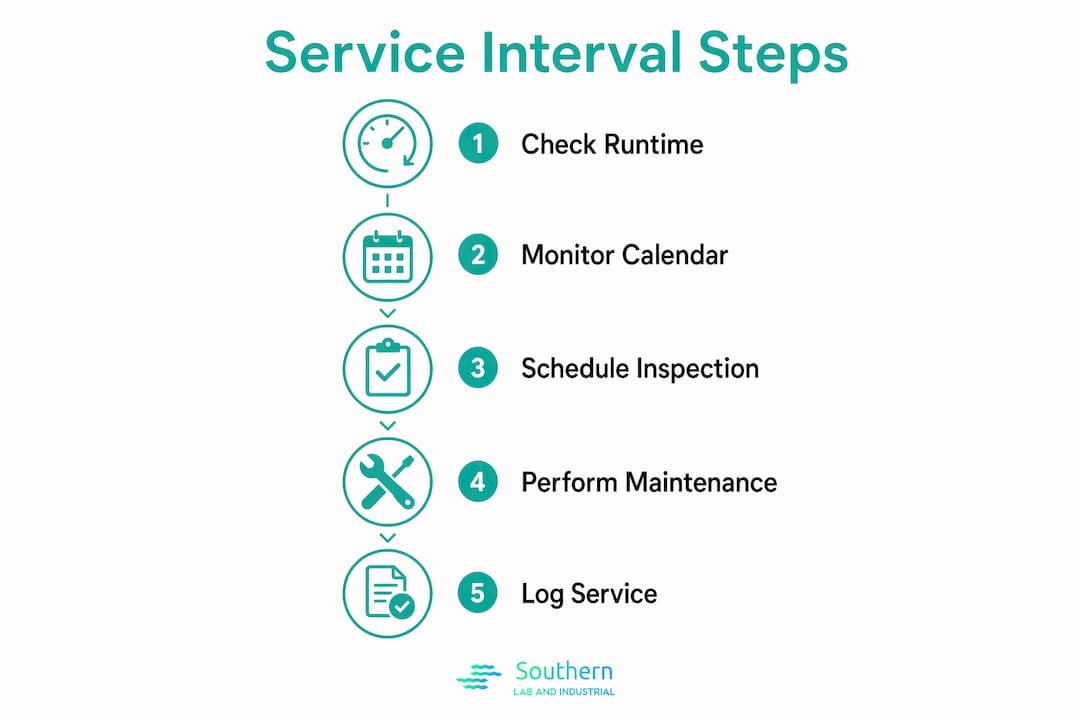
Effective generator upkeep intervals require a tracking system that captures both runtime hours and calendar dates simultaneously. Dual tracking of calendar time and runtime hours is the core principle that prevents any generator from falling through maintenance gaps, especially after extended outages that drive high consecutive runtimes.
Here is a practical framework for managing your generator maintenance schedule:
- Record the hour meter reading at every service visit. Log it alongside the date in a dedicated maintenance record. This creates the baseline for calculating your next runtime trigger.
- Set dual calendar reminders. One reminder for your calendar-based annual inspection and a second for your projected hour-based trigger based on average monthly runtime.
- Use a CMMS platform. Tools like UpKeep, Fiix, or IBM Maximo allow you to set dual triggers, attach service records, and generate compliance reports. Proper documentation through CMMS is considered essential for audit readiness. Undocumented service is treated as no service by inspectors and insurance auditors.
- Conduct weekly visual checks. Walk the generator, check fluid levels, inspect for leaks, and confirm the block heater is operational. Log the result even if everything looks normal.
- Schedule quarterly battery and ATS checks. These components fail silently. A battery that reads 12.4 volts at rest may still fail under cranking load. Only a load test reveals true battery condition.
Detailed maintenance logs increase scheduling accuracy, improve reliability, and satisfy insurance requirements. Facilities that carry generator-dependent operations, such as data centers, hospitals, or continuous process manufacturers, face real liability exposure if they cannot produce service records during a post-outage review.
Pro Tip: Attach a laminated service log card directly to the generator housing. Field technicians can record quick checks on the spot, and the card provides an instant visual confirmation of last service date during any inspection.
Key takeaways
A generator service interval is defined by whichever trigger arrives first: runtime hours or calendar time. Ignoring either trigger creates failure risk that preventive maintenance is specifically designed to eliminate.
| Point | Details |
|---|---|
| Dual triggers control scheduling | Service when runtime hours OR calendar time is reached, whichever comes first. |
| Intervals vary by generator type | Standby units need service every 100–200 hours or annually; industrial units every 200–500 hours. |
| Environment compresses intervals | Coastal, dusty, or extreme-temperature sites require more frequent oil, filter, and battery service. |
| ATS and batteries are high-risk items | Test batteries every 6–12 months and replace every 2–3 years to prevent startup failures. |
| Documentation is compliance | Undocumented service does not count for auditors or insurers; use a CMMS or physical log. |
Why “standby” does not mean low maintenance
I have seen facility managers treat standby generators like fire extinguishers: mount them, tag them, and check them once a year. That approach works until it doesn’t, and when it fails, it fails during an actual emergency.
The most common misconception I encounter is that a generator with low runtime hours needs minimal attention. Runtime hours measure mechanical wear. They do not measure battery degradation, fuel contamination, coolant corrosion, or ATS contact oxidation. A generator that ran 15 hours last year can still fail to start because its three-year-old battery finally gave out under cranking load.
Treat runtime like vehicle mileage and calendar time like a vehicle’s annual inspection. You would not skip an oil change on a fleet vehicle just because it spent most of the year parked. The same logic applies here. Runtime hours are the true wear metric, but calendar time governs the components that degrade regardless of use.
The facilities I have seen maintain the best generator reliability share one habit: they document everything. Not because auditors are watching, but because documentation forces discipline. When a technician knows they have to log a battery load test result, they actually perform the test. That accountability loop is worth more than any single maintenance task.
If you are managing on-site generation for critical operations, the investment in a structured PM program pays back every time the power goes out and your generator starts within 10 seconds.
— Kris
How SLI supports generator maintenance programs
SLI works with facility managers and maintenance teams across the Gulf Coast to build generator maintenance programs that hold up under real-world conditions and compliance reviews. Whether you are managing a single standby unit or a fleet of industrial generators, SLI provides local technical support that covers scheduled PM visits, ATS testing, battery service, and documentation aligned with NFPA 110 requirements.
SLI’s approach combines manufacturer-trained technicians with structured service records that satisfy insurance and regulatory audits. For facilities where generator reliability directly affects production continuity or safety, that combination reduces hidden downtime costs and removes the compliance risk of undocumented service. Explore real-world integration examples to see how SLI has helped facilities like yours build reliable, audit-ready power systems.
FAQ
What is a generator service interval?
A generator service interval is the scheduled maintenance threshold, defined by runtime hours or calendar time, at which specific maintenance tasks must be completed. Most standby generators require service annually or every 100–200 hours, whichever comes first.
How often should a standby generator be serviced?
Standby generators should be serviced at least once per year, regardless of runtime hours, because components like batteries, fuel, and coolant degrade over time even when the unit is not running.
What tasks are performed during a generator service visit?
A standard service visit covers oil and filter changes, air filter inspection, battery load testing, ATS functional testing, and a visual inspection of fluid levels and electrical connections. NFPA 110 also requires monthly load bank tests at 30% or greater load.
Does environment affect how often i should service my generator?
Yes. Coastal salt air, high dust, and temperature extremes can require doubling the standard service frequency for oil changes, air filter replacements, and battery inspections beyond OEM baseline recommendations.
Why is ATS testing part of the generator maintenance schedule?
The Automatic Transfer Switch is the component that actually transfers power during an outage. An ATS that has not been functionally tested may fail to operate when needed, making it one of the highest-risk items to skip in any generator inspection timeline.