Generators require local technical support because remote diagnostics cannot replace a certified technician physically on-site to replace a failed alternator, restore fuel systems, or document compliance records for a regulatory audit. For facility managers in industrial plants and analytical laboratories along the Gulf Coast, this distinction is not theoretical. A generator that fails during a critical run of GC or LCMS instrumentation, or during peak production, creates cascading costs that dwarf the price of a service contract. Local technical support, defined as a network of trained technicians and pre-positioned parts within rapid dispatch distance of your facility, is the operational backbone that converts a generator warranty into a real reliability guarantee.
Why generators need local technical support to minimize downtime
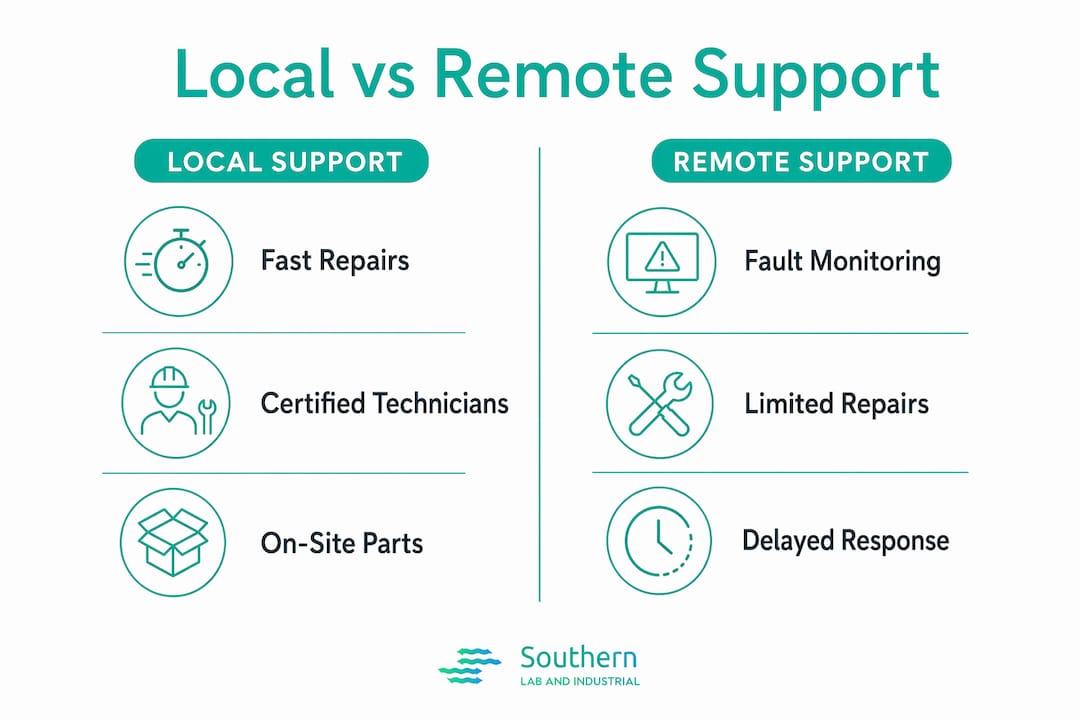
The single most measurable argument for local support is repair speed. Authorized local service providers reduce generator repair lead times from four weeks to three to five days by pre-positioning critical parts in-region. That difference is not a minor scheduling inconvenience. For a laboratory running continuous analytical workflows or a manufacturing facility with production targets, three weeks of unplanned downtime represents a material financial loss and potential contract penalties.
The reason remote-only support fails in these situations is straightforward. Phone support cannot fix physical failures like alternator breakdowns, fuel injector failures, or control board replacements in any reasonable timeframe. A technician 800 miles away who diagnoses the fault correctly still cannot act on that diagnosis. The part must ship, clear logistics, and then wait for a field visit to be scheduled. Each step adds days.
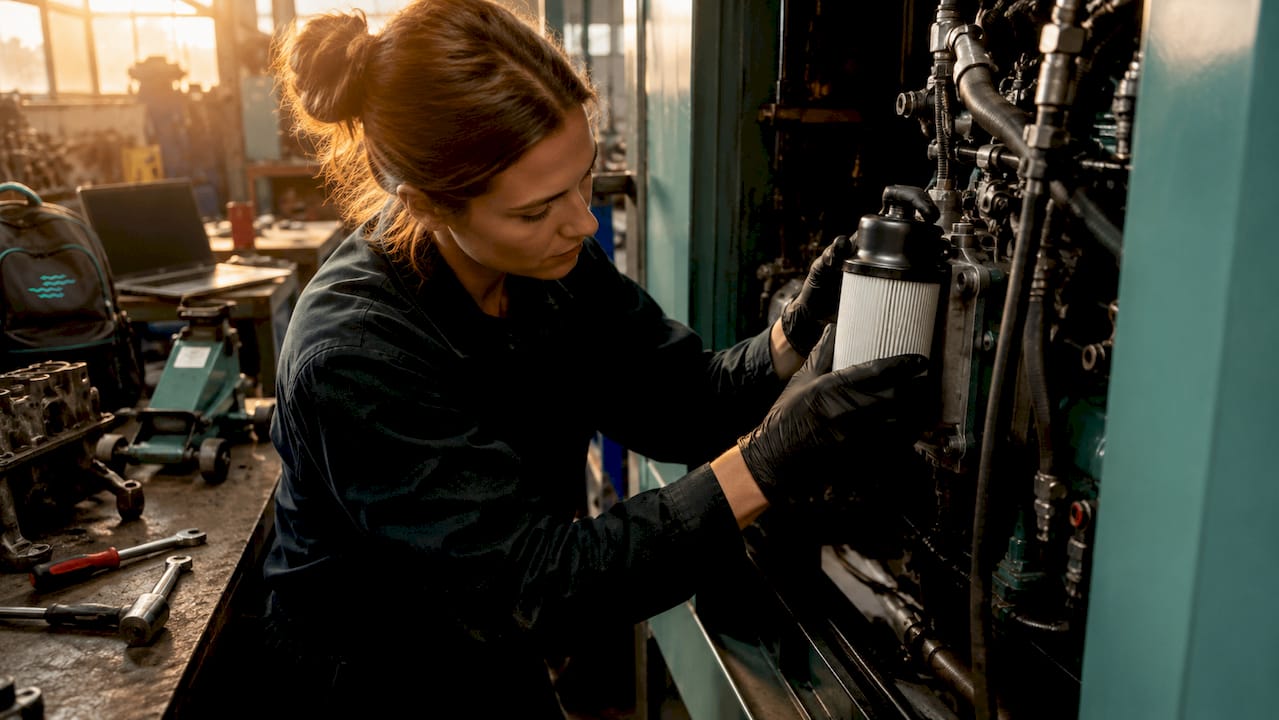
Effective support programs use a multi-channel escalation protocol. The sequence runs from remote fault code monitoring to phone-based diagnosis, then to on-site technician dispatch when physical intervention is required. Escalation from remote diagnosis to on-site inspection and parts replacement is the central mechanism for minimizing downtime. Without a local technician in the chain, that escalation path terminates at a phone call.
Pro Tip: Ask your service provider to confirm which critical spares, such as voltage regulators, fuel filters, and control modules, are stocked within 100 miles of your facility. Pre-positioned inventory is the single fastest lever for reducing repair turnaround.
| Scenario | Without local support | With local support |
|---|---|---|
| Parts sourcing | 2 to 3 weeks international shipping | 1 to 2 days from regional stock |
| Technician dispatch | Scheduled weeks out | 24 to 72 hours |
| Total repair lead time | 4 weeks or more | 3 to 5 days |
| Compliance documentation | Delayed or incomplete | Completed on-site at time of repair |
How local technicians satisfy NFPA 110 compliance requirements
Regulatory compliance is the second reason why local technical support is non-negotiable for most industrial and laboratory facilities. NFPA 110 Section 8.3.4 mandates thorough emergency power system inspections every six months, and those inspections must be performed by qualified personnel. In-house maintenance staff typically do not hold the certifications required to satisfy this standard.
The documentation burden is equally significant. Compliant facilities must maintain operational logs, load test records, fuel quality records, and transfer switch test results. A local certified technician generates this documentation as part of the service visit. Facilities that rely on internal staff or remote guidance to self-certify these records risk failing audits even when the physical hardware is in good condition. The gap is not in the equipment. It is in the paperwork trail that proves qualified oversight.
Non-compliance with NFPA 110 carries real consequences. Facilities can face fines, loss of operating licenses, and in healthcare or pharmaceutical settings, loss of accreditation. For laboratories operating under FDA oversight or ISO 17025 certification, an unqualified inspection record is a direct audit finding. Local certified technicians eliminate that exposure by providing credentials, signed documentation, and a verifiable service history.
Pro Tip: Schedule your NFPA 110 semiannual inspections at least 30 days before any anticipated regulatory audit. This gives your local service provider time to address any findings and update documentation before the auditor arrives.
Periodic inspections and detailed recordkeeping by local certified technicians are the practical mechanism for maintaining continuous compliance, not just passing the next audit.
What to look for when selecting a generator service provider
Choosing a provider with genuine local support capability requires asking specific, verifiable questions. Verbal commitments about response times are not sufficient. Facility managers should require written SLAs specifying technical support response times of 24 hours or less and on-site arrival within 72 hours for warranty-critical applications. Those numbers must appear in the contract, not in a sales presentation.
Service agreements with enforceable SLAs convert abstract promises into operational reliability plans. The difference between a provider who says “we respond quickly” and one who contractually commits to 72-hour on-site arrival is the difference between a vendor and a partner. When evaluating types of industrial repair services, the presence of enforceable response commitments is the primary differentiator between support models that perform under pressure and those that do not.
Use the following checklist when evaluating any generator service provider:
- Authorized service provider (ASP) status: Is the provider certified by the generator OEM, or do they operate independently without factory authorization?
- Regional technician headcount: How many certified technicians are based within 150 miles of your facility?
- In-region parts inventory: Which critical components are stocked locally, and what is the average fulfillment time?
- Written SLA terms: Does the contract specify response time, on-site arrival time, and escalation procedures?
- Documentation practices: Does the provider deliver signed inspection reports, test logs, and compliance records after every visit?
- Emergency callout capability: Is 24/7 emergency dispatch available, and what are the callout rates versus standard service rates?
- Remote monitoring integration: Does the provider offer IoT-based fault monitoring that triggers automatic technician dispatch?
A provider who cannot answer these questions with specifics is not structured to deliver local support in practice, regardless of what their marketing materials state.
How remote monitoring and local service work together
The most effective generator maintenance programs in 2026 combine 24/7 remote monitoring with rapid local technician response. Remote monitoring systems track abnormal vibrations, fuel consumption trends, coolant temperatures, and fault codes in real time. Remote monitoring detects fault codes and predicts maintenance needs, triggering local technician site visits before an unplanned failure occurs. This is the core value of a combined approach: the remote system provides early warning, and the local technician provides the physical response.
MECCA POWER’s integrated support model illustrates this architecture in practice. Their technical operations center monitors IoT controllers continuously, and when an alert threshold is crossed, a local technician is dispatched to the site. This approach has demonstrated a 90% reduction in unplanned downtime compared to reactive maintenance models. The remote layer catches problems early. The local layer resolves them before they become outages. Neither layer is effective without the other.
For facility managers running on-site gas generation alongside backup power systems, this integrated model is particularly relevant. A fault in a nitrogen or hydrogen generator that feeds a GC or ICP instrument can be just as operationally damaging as a power outage. The same monitoring and dispatch logic applies.
| Capability | Remote monitoring only | Local support only | Combined approach |
|---|---|---|---|
| Fault detection speed | Real-time | After failure is visible | Real-time |
| Physical repair capability | None | Full | Full |
| Preventive maintenance | Alert-based | Schedule-based | Alert-triggered dispatch |
| Compliance documentation | Partial | Complete | Complete |
| Downtime reduction | Moderate | Moderate | Maximum |
Local on-site certified technicians form the essential physical layer of any multi-channel support program. Remote tools identify the problem. Local technicians fix it.
Key takeaways
Local technical support for generators is the combination of certified on-site technicians, pre-positioned regional parts inventory, and enforceable SLAs that together reduce repair lead times, satisfy NFPA 110 compliance requirements, and prevent unplanned downtime that remote support alone cannot address.
| Point | Details |
|---|---|
| Repair speed depends on local parts | Pre-positioned regional inventory cuts repair lead time from four weeks to three to five days. |
| NFPA 110 requires qualified technicians | Semiannual inspections must be performed by certified personnel, not in-house staff, to satisfy compliance. |
| SLAs must be written and enforceable | Require 24-hour response and 72-hour on-site arrival in the contract, not just verbal commitments. |
| Remote monitoring needs local follow-through | IoT fault detection only reduces downtime when paired with a local technician who can physically respond. |
| Documentation is a compliance asset | Signed inspection records and test logs from certified technicians protect facilities during regulatory audits. |
Why I think “remote support” is a false economy for critical facilities
I have seen this pattern repeat itself across industrial and laboratory facilities: a facility manager selects a generator supplier based on equipment specifications and price, accepts verbal assurances about support, and then discovers the gap when the first serious fault occurs. The generator is under warranty. The supplier has a support line. But the nearest certified technician is three states away, and the critical spare is on a four-week international lead time.
The uncomfortable reality is that generator reliability is not determined at the point of purchase. It is determined by the support infrastructure that exists after installation. A technically superior generator with weak local support will underperform a mid-tier unit backed by a dense regional service network. Facility managers who treat local support as a premium add-on are mispricing the risk.
What I have found actually works is building the service relationship before you need it. Identify your authorized service provider, confirm their regional technician headcount, verify their parts inventory, and review the SLA terms annually. The gas generator integration challenges that create the most operational disruption are almost always the ones where the support infrastructure was not validated at commissioning.
Remote monitoring is genuinely valuable, but it is a diagnostic tool, not a repair mechanism. Facilities that invest in IoT monitoring without a local technician network to act on the alerts are collecting data they cannot use quickly enough. The investment in local partnerships is not an extra cost. It is the cost of the reliability you thought you were buying when you purchased the generator.
— Kris
How SLI supports your facility with local generator expertise
SLI provides gas generation and power protection systems for analytical laboratories and industrial facilities along the Gulf Coast, backed by local technical support that goes beyond equipment delivery.
SLI’s service and support programs include certified technician dispatch, remote monitoring integration, and maintenance contracts covering LNI Swissgas, Nel Hydrogen, and NXT Power equipment. Whether you manage a GC laboratory dependent on continuous hydrogen supply or an industrial facility requiring backup power reliability, SLI structures service agreements with the response time commitments and documentation practices that satisfy both operational and compliance requirements. Contact SLI to discuss a service contract tailored to your facility’s specific uptime and audit requirements.
FAQ
Why can’t remote support replace local technicians for generators?
Remote phone support cannot resolve physical failures like alternator breakdowns or fuel system faults without a technician on-site. Diagnosis by phone is possible, but physical repair requires a certified technician with the right parts in hand.
What does NFPA 110 require for generator inspections?
NFPA 110 Section 8.3.4 mandates semiannual emergency power system inspections by qualified personnel. In-house staff without the required certifications do not satisfy this standard, making local certified technicians a compliance requirement, not just a convenience.
What SLA terms should I require from a generator service provider?
Require written commitments specifying 24-hour technical response and 72-hour on-site arrival as a minimum for warranty-critical applications. Verbal assurances are not enforceable and do not protect you during an outage or audit.
How does remote monitoring improve generator reliability?
Remote monitoring detects fault codes and abnormal operating parameters in real time, triggering local technician dispatch before a failure occurs. The monitoring layer is only effective when paired with a local service network that can physically respond to the alert.
How far in advance should I schedule NFPA 110 inspections?
Schedule semiannual inspections at least 30 days before any anticipated regulatory audit. This allows your local service provider time to address findings, update documentation, and confirm your facility’s compliance record is complete before the auditor reviews it.